
From Rural Telehealth to National Digital Health Platforms

Most of us are familiar with telemedicine from the pandemic, when “seeing” a doctor in person was the last resort rather than the first choice for most people and health care providers. Today, people are preferring to meet with health care professionals via video call for many reasons, ranging from outpatient visits supporting in-person rural health care delivery to retail-style care models where a physical meeting may not be needed at all.
In rural America, where getting to see a specialist or reaching a primary care facility may take hours of driving, telemedicine powered by fiber is a critical tool in delivering better outcomes and saving lives. Bringing urban-located resources to the heartland via broadband means treating people sooner and saving them time and money by reaching them in their communities.
“Norton County Hospital is the epitome of what a rural county hospital looks like,” said Kevin Faughnder, President and CEO, North County Hospital, Norton, Kansas. “We are a critical access hospital. We can have no more than 25 beds in our hospital. If we had 26, we would not be able to maintain the critical access designation. The nearest hospitals to us are the counties to the east and west, which are about 30 miles in either direction. That’s what you see in rural America. The larger hospital closest to us is about a little over an hour away, and that’s in McCook, Nebraska, or Hayes, Kansas, and that’s about an hour and a half away.”
With a staff of around 120 people total and its location, Norton’s resources and services are much more limited than a larger urban health care center, but the community still needs specialized services for the population of around 5,300 people in the county. The hospital offers outpatient clinics in dermatology, cardiology, and neurology, and is looking to offer orthopedics in the future.
“We’re constantly looking for specialists to come to our facility and offer an outpatient clinic, so our community members don’t have to drive long distances,” said Faughnder, “As an example, the nearest neurologist might be more than three hours away. We were able to sign a contract with a neurologist that’s going to come once a month, which is a huge win for our community. We’re always looking to expand our services if it makes sense. Some things don’t make sense for us, but the things that do, we want to try to bring that service to our community so they can get that done here versus driving.”
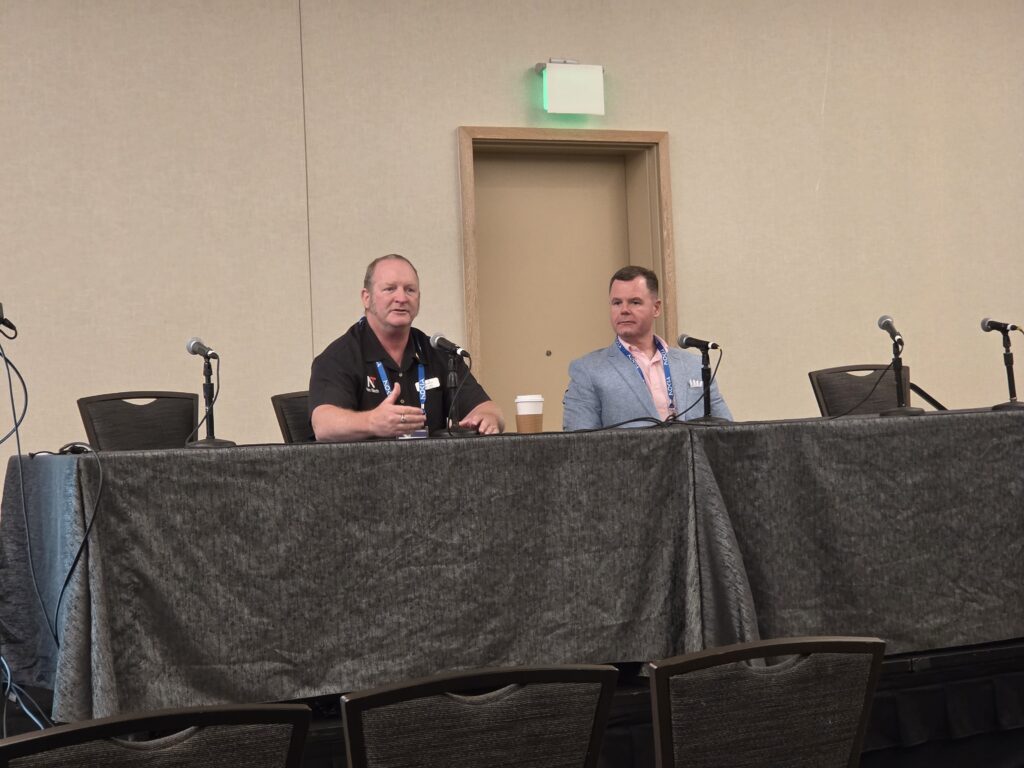
FBA Board Liaison Jimmy Todd (L) and Norton County Hospital President and CEO Kevin Faughnder discuss the challenges of delivering health care in rural areas at Fiber Connect 2026. Source: Doug Mohney
The challenge for Norton is that it’s very difficult to get a specialist to drive more than an hour, while the closest larger towns where a specialist may reside are a minimum of 90 minutes away and more often longer. The hospital’s podiatrist drives more than two hours to offer an on-site clinic once a month. Yet despite the distance, the hospital is equipped with a lot of new radiology equipment, including a 3D mammography scanner, a CT scanner, and a standard X-ray machine, while the MRI machine shows up in a truck once a week every Monday morning from 7 A.M. to 1 P.M.
“Our largest challenges are to bring in services and talent,” said Faughnder. “We’ve got to have people in this community that want to go into health care, whether it’s nursing or radiology or laboratory services. It can be difficult to find those basic specialists that are needed to make our hospital work. Even some of the other specialties, for example, environmental services or dietary, we struggle sometimes to find people and that was a surprise to me.”
Fiber comes to the fore for supporting outpatient clinic services, either sponsored by the hospital or used by local residents getting services from other specialists, such as oncology. “We just signed the neurology contract, and he’ll do one day a month on site, and a second day from telehealth,” said Faughnder. “That clinic is going to blow up quick because right now people are driving three or more hours to see the closest neurologist.”
Norton’s role in critical care is to stabilize the patient and then transport them to the nearest large hospital best suited to support their needs depending on the issue. To support these services, the hospital has a virtual 24x7x365 on-call service through Avel eCare delivered via fiber, with its call center operating out of South Dakota. Avel provides advanced physician and nursing staff available at the press of a button that can coach the onsite team through a very complicated case.
“It’s a full variety of support, whatever we need,” said Faughnder. “We often staff our emergency department with an Advanced Practice Provider, APP, which is a physician’s associate, sometimes called a physician’s assistant or nurse practitioner. Having the APP being able to hit a button and provide a licensed physician has been hugely important to our staff. There are cameras in two of our emergency rooms, so they’re able to get a very close look and they can monitor our on-site equipment and X-rays as well.”
The virtualized medical support service can handle a vast number of scenarios in the local community, from strokes and heart attacks to delivering babies, which doesn’t happen all that often in the county. Still, if the need arises, Norton has birthing support available at the push of a button.
Currently, around 13% of Norton’s specialty clinic services are delivered by telehealth, including endocrinology, neurology, and rheumatology. In the future, Faughnder would like to add outpatient support for orthopedics and oncology, with an emphasis on smaller procedures for the former and infusion support for the latter. Rural hospitals such as Norton provide vital services for the community while acting as an off-loading mechanism for larger health complexes.
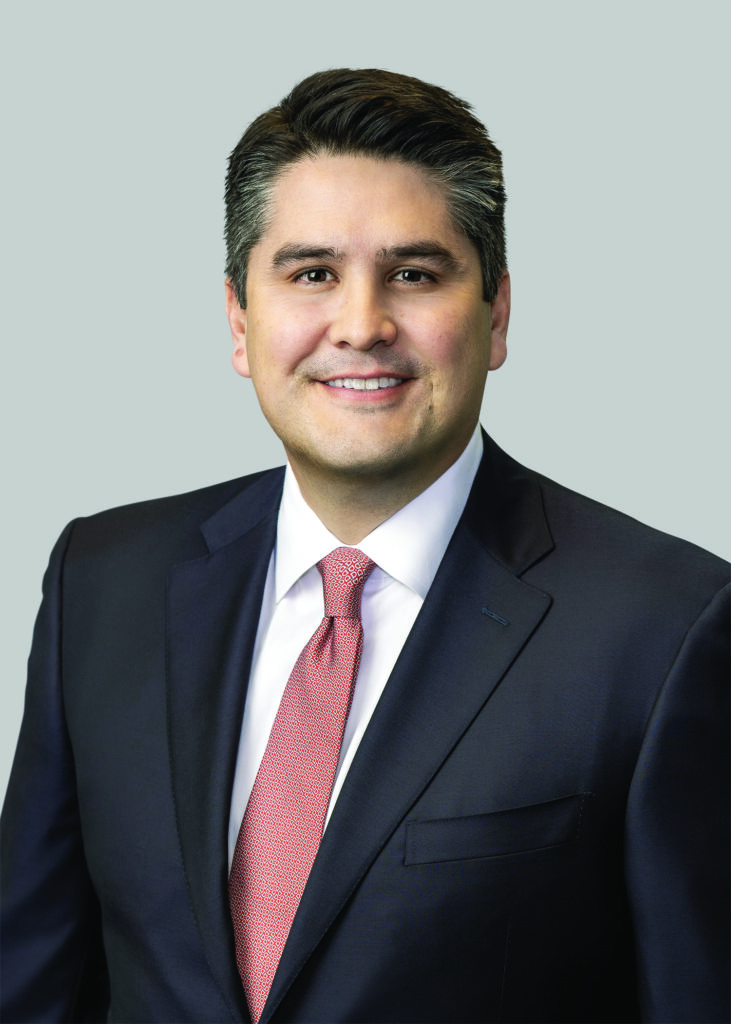
The requirements for health care broadband have continued to evolve, moving from basic connectivity and a conduit relationship to more locations and providers looking for more documentation, security, and formalized SLAs, according to Aaron T. Maguregui, Partner, Foley & Lardner, LLC. Source: Foley & Lardner, LLC.
“Large hospital systems would not be able to absorb all of the patients that would transfer to them,” said Faughnder. “Without county rural hospitals, they don’t have the capability to handle everyone, and so the services that we offer here are vital to our local community, and to the larger region as well. It’s important that people making investment decisions invest in rural America healthcare. It’s absolutely critical that we’re not overlooked.”
At Fiber Connect 2026, several panels explored the relationship between rural medical services during the “Telehealth & Broadband Summit: A Byte a Day Keeps the Doctor Away” track, with the need for high-speed connectivity tied in with emerging AI-based solutions to lower cost and deliver better outcomes.
“Broadband connectivity really is clinical infrastructure. One of the things we piloted when I worked with a large Medicaid health plan was an urgent care facility in Hazard County, Kentucky that was completely virtual,” said Aaron T. Maguregui, Partner, Foley & Lardner, LLP. “There wasn’t an emergency room within 55 miles. One of the problems we immediately ran into was that we had good access by reducing the mileage to care, we had the availability component there with a staffed facility, but we didn’t have connectivity. The folks there weren’t able to get online.”
Being able to diagnose critical issues and offer on-site care with a virtual component would have delivered significant cost saving to Medicaid. An ambulance ride to transport a patient cost around $8,000, while a more serious condition would require a helicopter ride at $47,000, said Maguregui.
Broadband service providers entering into the health care ecosystem need to understand that it continues to evolve in sophistication and requirements. A decade ago, basic connectivity would suffice for consumer-facing applications with HIPAA treating broadband connectivity as a conduit relationship where data is simply passed along, but Maguregui asserted the bar to entry when connecting healthcare locations has steadily evolved, requiring more documentation, security, and uptime requirements with formal service level agreements, especially for AI and other applications that are storing and working with data.
“You’re starting to get these different privacy and security requirements that a broadband provider or vendor maybe has never seen before,” said Maguregui. “A health system has asked its telecommunications consultant or vendor to sign a Business Associate Agreement, an Infrastructure Security Network Agreement; five or six years ago, you would have said ‘What’s that?’ Now the industry is evolving to be a new and thriving vertical in the healthcare system as opposed to a utility-only player.”
Delivering Nationwide Care – The Story of Noom
Telehealth for the individual has made rapid progress over the past decade, with delivery mechanisms moving from simple video interactions to sophisticated digital health platforms that deliver support and care through applications, health care specialists, and access to medication.
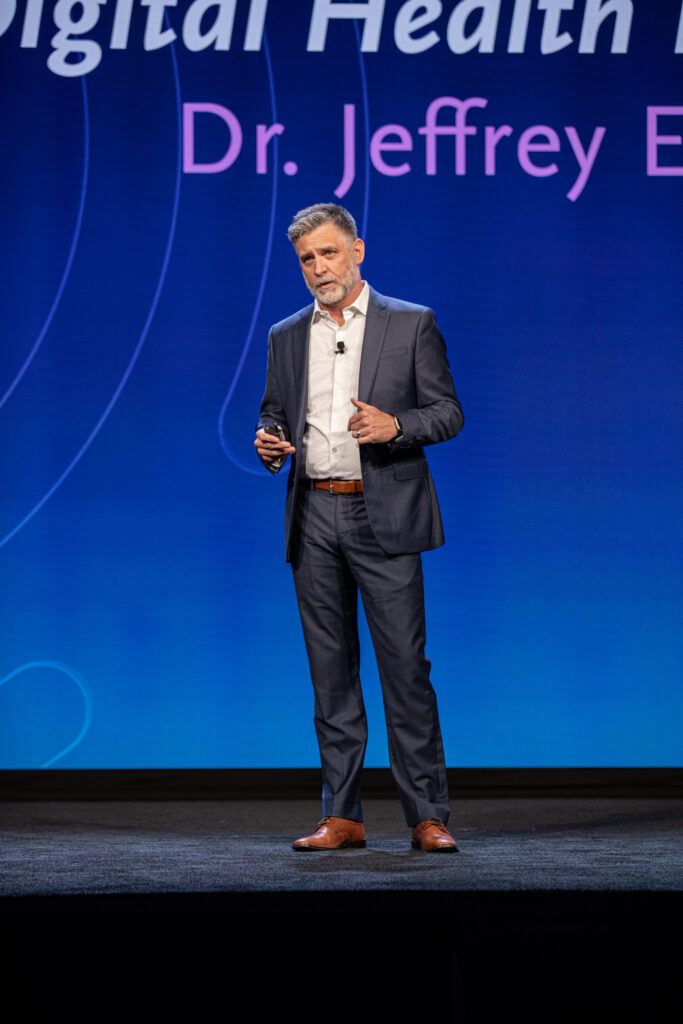
Noom’s Dr. Jeffrey Egler presented a keynote at Fiber Connect 2026 focused on fiber connectivity’s ability to support digital health and behavioral change. Source: FBA
Noom bills itself as a consumer-led digital health company that uses the latest in proven behavioral science to empower people to take control of their health for good, using a combination of psychology, technology, medication, and coaching. The firm’s core focus on weight management has now expanded to include helping people with conditions such as diabetes and menopause.
Founded in 2008, Noom has reached over 50 million users globally through its programs, while its enterprise and employer-sponsored platforms cover more than 6.5 million users through health plans and corporate partnerships. The firm works with 5 of the top 20 health plans in the country, with its preventive health approach saving employers and health plans thousands of dollars per member.
“Seventy percent of healthcare costs worldwide are driven by preventable conditions,” Dr. Jeffrey Egler, Chief Medical Officer, Noom, told the audience at Fiber Connect 2026. “That 70% number is also important, because 70% of chronic conditions are actually preventable through better lifestyle… What we talk about frequently at Noom is that the average American with the average American medical care will eventually get the average American chronic disease.”
However, Egler said there’s hope because of a fundamental shift happening to move from reactive care to proactive care, with reactive care being you are diagnosed with a disease and get a treatment. Proactive care focuses on lifestyle and behavioral changes made early on to prevent or delay the onside of a disease or condition.
“We’re seeing this happen in the market,” Egler said. “People are showing up and people are spending money, demonstrating this shift. We see primary care visits plummeting, while concierge medicine and direct primary care models are increasing… People are gaining an interest in their health. They’re gaining this desire to become more proactive. They don’t want to wait around until they’re sick, or they’re starting to become sick, and they don’t want to wait around until they become more so. Why is this fundamental shift happening? It’s because wellness works.”
Improvements in basic health statistics and outlooks, such as improved A1C numbers and adding on muscle, leaded to better outcomes such as reduced cardiovascular health heart risks and overall risk of death. Mental wellbeing and social relationships, such as those maintained over broadband connectivity, also provide significant benefits.
“It’s amazing to think about a 50% drop in mortality risk for those people that have the highest sense of purpose versus those with the lowest, and a 50% drop in mortality risk for people that have better social relationships,” Egler said. “It turns out that loneliness is as harmful as smoking three quarters of a pack a day. Wellness works. There’s no medication, no Western medicine therapeutic that has these kinds of mortality reductions.”
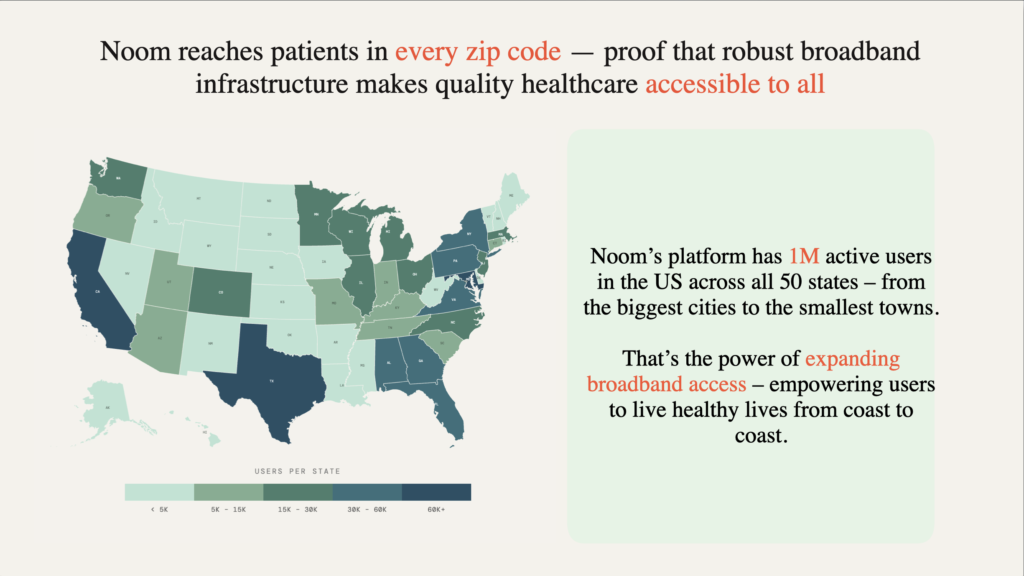
The combination of fiber broadband and cloud-based services has led to retail health care services available on a national scale, such as Noom’s multi-faceted behavioral approach.
Source: Noom CMO presentation at Fiber Connect 2026
Noom uses three levers to change people’s lives: technology, medicine, and psychology, to overcome three barriers to improved health: access to care, engagement, and durability of treatment. Broadband enables Noom to meet people where they are at and when they are available through a digital platform, giving them reach and access at a much greater frequency than a traditional healthcare system does by typically meeting with a provider maybe once or twice a year.
“We have a million active users across all 50 states,” said Egler. “We’re providing access in a much greater way than a traditional healthcare system because the access we’re providing is in their pocket. It’s in their homes, it’s where they live.”
But access alone, as digital literacy advocates understand, is not enough. Noom provides a support system through a combination of motivational techniques as well as GLP-1 medications, with Egler noting that the new pharmaceuticals alone are not as effective and lasting as medication combined with behavior changes and reinforcement.
“We’re building an engine to continue engagement,” said Egler. “Phase one was getting people aware of and on the medications, but we see that’s not working long term. Phase two is durable outcomes. How we support people that are having these tremendous improvements to continue these improvements long-term, that’s what really matters.”
A balanced combination of medication and behavior changes delivers synergic effectiveness for people, with a combination of new GLP-1 users with an app showing 10 times the engagement of the average help app, with increased weight loss and use of the medication, staying on the medication 2.2 times as long. At week 40, those users using both the medication and a supportive application show 25% more weight loss. Similar beneficial results have been shown for other cases, with 75% of Noom members able to sustain a 5% weight loss for a year or more and 64% of people able to prevent themselves from developing diabetes using the company’s prevention app.
The combination of app and GLP-1 medication enables more customized use of dosage based on daily and weekly interaction with the application, providing a level of personalization that isn’t available through standardized health care. Medication can be adjusted up or down based upon measured weight loss recorded in the app.
“We would not be able to fulfill this mission and vision without the connectivity that broadband brings, which allows us to achieve access, engagement, and durability through technology, medicine, and psychology,” said Egler. “We’re taking what we’ve learned and we’re applying it to category and condition expansion, using behavior change, which has been a missing link for chronic care for so long, and using technology to be able to help in these realms as well. We’re now looking at putting this tool in the physicians’ pockets, putting these powerful digital tools into the hands, the toolboxes, the EMRs, and the workflows of veteran providers.”
This article and similar stories can be found in the Q3 edition of the Fiber Forward Magazine.

Related Content
Fiber for Breakfast Week 41: Telecom Turning Point: Connecting America and Building What Comes Next After years of planning, approvals,…

Fiber for Breakfast Week 40: Arkansas’s Broadband Momentum Arkansas entered this decade with a lot of broadband work left to…
WASHINGTON, D.C.— (October 7, 2026)—The Fiber Broadband Association (FBA) today announced the release of the third chapter of its Building…