
Fiber For Breakfast Week 4: Cracking the Code on Broadband Coordination in Maryland

Fiber For Breakfast Week 4: Cracking the Code on Broadband Coordination in Maryland
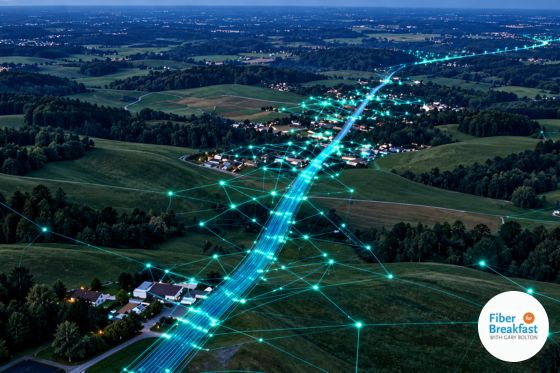
For years, Maryland had a familiar problem: broadband and digital infrastructure assets existed all over the state, but no one could see them all in one place. Fiber routes, towers, government buildings, transportation systems, and underserved communities were planned and managed in silos, often leading to duplicated effort and missed opportunities. On this week’s Fiber for Breakfast Eric Bathras, Chief Technology Officer for Maryland’s Office of Infrastructure, joined Gary to explain how the state set out to fix that problem by building a statewide “Single View” of digital infrastructure, and how that decision is already reshaping how Maryland plans, funds and deploys broadband.
Bathras said the idea was born from experience. In his previous roles working across multiple jurisdictions, he repeatedly saw governments struggle to answer basic questions about their own assets. “There was this massive gap,” he explained, “in being able to go to one place and see and navigate all the broadband and digital infrastructure assets across a state.”
In January 2025, Governor Wes Moore signed an executive order creating the Digital Infrastructure Group, or DIG, bringing together 11 state agencies that own or manage broadband-related assets. The group laid the foundation for Single View, a platform that maps everything from state-owned fiber and towers to real estate, transportation systems, community anchor institutions, and unserved homes and businesses.
At the heart of the effort is what Bathras calls Maryland’s “Goldilocks approach”: one public investment designed to serve the broadest possible set of needs. Instead of building infrastructure for a single agency or purpose, projects are evaluated across four pillars — transportation assets, vertical assets like towers and buildings, community anchor institutions, and underserved communities. If a project can hit all four, it rises to the top.
That strategy is already paying off. Bathras shared a recent example where Maryland partnered with the Maryland Broadband Cooperative on a grant-funded build. With a $250,000 state contribution, Maryland will receive 26 miles of 96-strand fiber — infrastructure that would have cost more than $3.5 million otherwise. The build will serve homes and businesses, connect state IT and transportation assets, and bring fiber within 1,500 feet of a key tower location. “That’s the first real use case since DIG was created,” Bathras said, “and it shows what statewide coordination can unlock.”
Single View is also changing day-to-day operations. By tying network data to state real estate records, Maryland can now move agencies into buildings knowing whether Network Maryland service is already available — saving months of delay. The platform also tracks tower assets that generate roughly $2 million annually through resource-sharing agreements, helping the state identify where fiber-to-the-tower investments could unlock new revenue.
Looking ahead, Bathras said the platform’s potential extends well beyond broadband planning. Maryland is exploring how Single View could support emergency management during major weather events, improve resiliency planning, and even incorporate AI to identify optimal builds. Working with Esri, the state is testing how AI could analyze Goldilocks criteria and recommend the most impactful projects faster.
For Gary, the takeaway was clear. Maryland’s approach doesn’t just improve visibility — it saves taxpayer dollars, accelerates deployment, and positions the state for the next wave of infrastructure demands, from AI to data centers.
As Bathras put it, the real value of Single View is simple: it turns coordination into strategy — and strategy into results.
Click here to watch the full interview.

Related Content
Fiber for Breakfast Week 40: Arkansas’s Broadband Momentum Arkansas entered this decade with a lot of broadband work left to…
WASHINGTON, D.C.— (October 7, 2026)— The Fiber Broadband Association (FBA) today announced that its Fiber for Breakfast series will celebrate its…
Fiber for Breakfast Week 39: BEAD Isn’t Over Yet: What Happens After Final Approval? After years of planning, mapping, challenges, and subgrantee selection, BEAD…