
The Future of Fiber Technology: What’s Next?

The Future of Fiber Technology: What’s Next?
Over the past 50 years, optical fiber networks have developed a well-earned reputation for long-term scalability and reliability. Fiber is essential to the modern economy, and its role as critical infrastructure is becoming widely recognized.
As we continue connecting all homes and businesses in the US and Canada with fiber, the question that follows is “What’s next?”
First things first
Before we answer, “What’s next?”, we need to reiterate that the fiber that has been deployed for decades has no known expiration date, as highlighted in FBA’s recent paper, “Fiber Broadband Scalability and Longevity.” It will continue to be the primary communications workhorse and remain the heart of communications networks around the world for decades to come. “Standard” (ITU G.652/657) Single-mode optical fiber has commercially existed for over 40 years, and we have yet to fill up the pipe. What comes next will augment, not replace, these networks.
The Importance of Lower Latency
Network latency in its most basic sense is the delay in time from when a signal is sent to when it is received. Standard fiber is fine for latency for most applications including middle mile and FTTH, but some niche data center/AI network applications and some high-speed financial trading applications can benefit from even lower latency than what’s typically achieved with standard fiber.
Hollow Core Fiber Reduces Latency
Hollow Core Fiber (HCF) is emerging as a significant technology for these latency-sensitive applications. Light travels almost 50% faster in HCF compared to traditional single-mode fiber, resulting in significant latency improvements.
Standard fiber is composed of a core that is made of pure silica (glass) with chemical dopants added to change the index of refraction and guide the light. The core is surrounded by a cladding of silica. This combination provides excellent light guiding properties, but the dopants slow the light as it travels down the fiber.
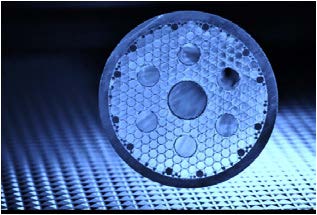
Figure 2 – Hollow Core Fiber End View. Source: Lightera.
Hollow core fibers are fibers made of a combination of glass and air. Since light travels faster in air than in glass, light can travel much faster in hollow core fibers.
However, hollow core fibers come with challenges. At this point, they’re significantly more expensive than traditional fibers. They’re also inherently more challenging to splice since there is less glass in the structure, but splicing solutions are emerging quickly.
In short, hollow core fibers present advantages for some specialized applications, but these fibers are not expected to replace more traditional fibers in more traditional applications.
Multicore Fibers and Increased Density
The fiber industry has a long history of increasing density, or fiber capacity per unit area. Previous innovations such as micro cables, smaller coating diameters, and rollable ribbons have already reduced diameter per unit area by up to 75% versus traditional loose tube cable designs.
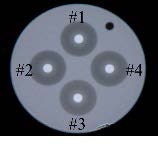
Figure 3 – 4-core multicore fiber. Source: Lightera.
Multicore fibers represent the next step in increasing fiber density. Multicore fibers have multiple standard single-mode cores in a traditional 125-micron glass package. These cores have similar performance specifications as standard single-mode fibers — there are just more cores available. Although different versions with as many as 19 cores have been used in laboratory experiments, the industry appears to be landing on 4-core fibers as a standard. Standardization amongst the industry will be very important for these fibers to ensure the same multi-vendor compatibility we’ve had for decades with standard single-mode fibers.
These fibers can significantly enhance the capacity of a given amount of duct space. However, these fibers are expensive. For the foreseeable future, they will mainly be viable for those applications that really need the capacity in space limited areas, such as data center interconnect and submarine applications.
Splicing these fibers requires splicers that can rotate fibers to align the cores. Although these splicers have been used for decades for specialty applications, the existing fiber technician base will need to retool to splice these fibers. These splicers are expensive, which will further limit the application space in which the multicore fiber market grows. As with hollow core fibers, the cables in which the fibers are qualified will continue to be limited for a significant period of time.
Finally, the process of removing light from an individual core to an individual laser/detector can be cumbersome. There are new ways of doing this including having the fiber cores directly connecting to laser/detectors without individual fanouts. As this process improves, viability for multicore fibers will increase.
Distributed Optical Fiber Sensing
Both hollow core and multicore fibers are targeted for specific applications and will likely be limited to specific parts of the network.
A technology that has much more potential for ubiquitous adoption is fiber optic sensing.
Fiber has been used as a sensor for decades. Changes in light transmission can give amazing insight into vibrations, strain, and temperature. However, newer versions of fiber, electronics, and machine learning/AI bring the potential to sense the world around us with incredible resolution. For example, fiber cables have detected footsteps over one hundred feet away from an underground cable, individual small birds landing on an aerial cable and helicopter blades whirring hundreds of feet above a cable.
With this type of sensitivity, it’s easy to see how sensing can be used for network protection — it’s already occurring in a few locations today. If the network can sense a bird, it can sense a squirrel or a backhoe, potentially giving the fiber broadband provider time to respond before damage takes place.
In addition, once the sensing network is in place, the potential for the use of the data is almost unlimited. From augmenting traffic management techniques for autonomous vehicles to enabling precise cable locating and beyond, the potential use cases are only limited by our collective imagination.
With the current pace of change unlikely to slow at any point in the foreseeable future, ubiquitous fiber to homes and businesses is only the start of what fiber networks can do. What’s next for fiber is truly exciting!
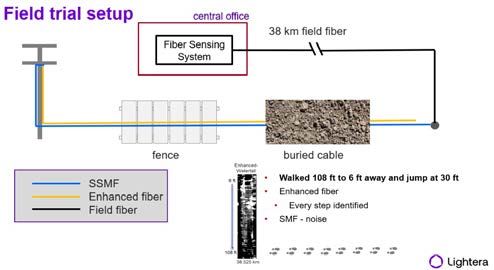
Figure 3 – 4-core multicore fiber. Source: Lightera.

Related Content

Fiber for Breakfast Week 40: Arkansas’s Broadband Momentum Arkansas entered this decade with a lot of broadband work left to…

For tribal nations, sovereignty and the preservation of indigenous cultures is fundamentally intertwined with the scrutiny, acceptance, and adoption of the latest technologies. This path provides a sustainable bridge between generations while creating jobs and strengthening ownership and self-governance.
Alabama-based Dragonfly Internet is a relatively new service provider but traces back its leadership and experience roots to owner ITC Holding Company, LLC, a venture and management firm with decades of involvement in wireline, cellular, and internet service providers.