Fiber Connect 2026 – The Broadband Policy Upload
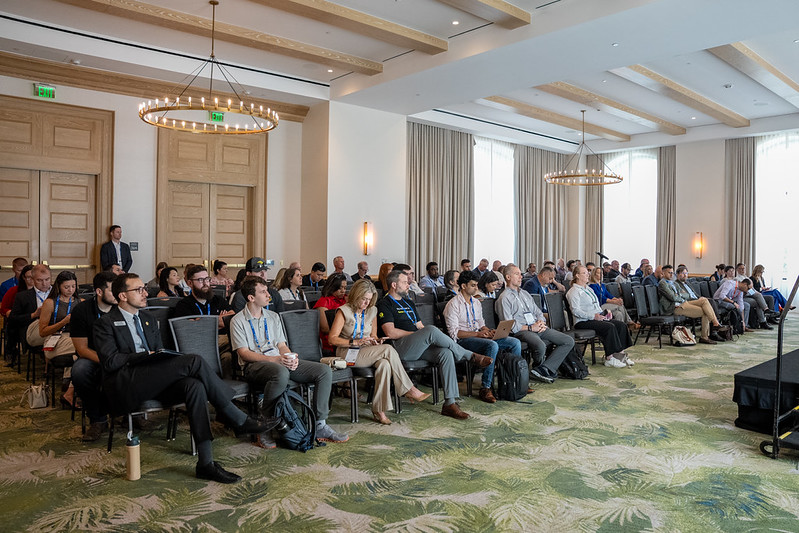
At Fiber Connect 2026 in Orlando, Florida, FBA’s Public Policy team convened industry leaders, policymakers, and stakeholders for a series of discussions at the Broadband Policy Upload exploring the policy considerations, programs, challenges, and opportunities shaping industries and technologies that rely on fiber infrastructure. As Marissa Mitrovich, FBA’s Vice President of Public Policy noted, “emerging technologies are rapidly reshaping industries like healthcare and agriculture, but without the capacity and low latency fiber enables, they cannot scale from early adoption to widespread, real-world impact”.

Tinae Bluitt and Dan Diorio
- Cybersecurity’s New Frontier as New Communities are Connected – After hacking the room and letting the audience know who had apps on their phones creating vulnerabilities, Professor Sascha Meinrath of Penn State University joined FBA’s GFiber Regulatory Fellow Jeanne Le Delaizir for a fireside chat discussing national security, cybersecurity, accountability, and the policies considerations associated with rapidly expanding connectivity amid evolving and often lagging cyber defenses.
- Hyperscale Data Center Impact on Broadband Infrastructure – FBA’s Public Policy Manager, Tinae Bluitt, sat down with Dan Diorio, Vice President of State Policy at the Data Center Coalition for a fireside chat on how hyperscale data centers are reshaping broadband infrastructure demand in the AI era. The discussion explored evolving state and local policy trends, infrastructure investment, common misconceptions surrounding data centers, and the broader economic impact these projects can bring to communities.
- Autonomous Vehicles and the Information Superhighway – The conversation took place between FBA Policy Director Lukas Pietrzak and Beep, Inc.’s head of product, Ian Clark. As Beep, Inc. increases their presence in autonomous multi-passenger and public transit solutions, the company is increasingly reliant on low-latency fiber to supply necessary data to safely operate their fleet while returning real-time feedback on efficiency. As autonomous modes of transportation become more present in daily life, the need to for connected communities will continue to grow.
- Policy Imperatives Impacting Telehealth, Precision Ag, and Aging – This panel featured Autumn Lankford Higgins (American Farm Bureau Federation), Sara Raza (University of Washington School of Law), Ramsey Alwin (National Council on Aging), moderated by Chris Champion (C Spire). The conversation focused on how fiber-enabled technologies are transforming healthcare access, precision agriculture, and aging services. All panelists agreed that their solutions will bring the most impact to the last mile, those who have long been under or unserved, and fiber connectivity is going to be critical to the success of these services.
Fiber Connect, Broadband Policy Upload
Powering the Network (Out & About)
FBA Brings Fiber to Connect X
Earlier this month, FBA’s Vice President of Public Policy Marissa Mitrovich and Policy Director Lukas Pietrzak participated in panels at the Wireless Infrastructure Association’s Connect(X) conference. The conference focused on innovations taking place in the wireless industry and FBA highlighted the critical partnership between WIA members and the fiber backbone that powers the technology. Marissa’s panel discussed the intersection of 5G, 6G, Fixed Wireless, Satellite and Fiber. One main takeaway from the conversation is that fiber is the backbone of all of these technologies and its underlying infrastructure plays a key role in enabling fast, reliable connectivity and supporting the data demands of next-generation networks. Lukas’ panel explored the history of BEAD and the program’s trajectory for upcoming deployment and potential changes.
FBA Brings Broadband Perspective to AI Policy Discussion in New York
FBA’s Marissa Mitrovich thanks the Practising Law Institute of New York for inviting her to participate in their first ever AI and communications panel which brought together industry leaders to share views on federal proposals, the patchwork of state privacy laws, and recent calls for moratoriums on state AI and privacy regulations – highlighting what these developments mean for innovation and consumer trust. The conversation was led by Rebekah Goodheart, Jenner & Block and included Traci Biswese, NCTA, Madeleine Findley, Jenner & Block, and Arpan Sura, FCC.
FBA Speaks at Pennsylvania Telephone Association Spring Conference
FBA’s Jeanne Le Delaizir joined the Pennsylvania Telephone Association Spring Conference in State College, Pennsylvania, where she provided a Washington policy briefing focused on the latest developments surrounding BEAD implementation, Universal Service Fund reform, and broadband permitting.
FBA Joins Coalition Letter opposing New York Broadband Oversight Bill
The Fiber Broadband Association recently joined several companies and associations, including NTCA – The Rural Broadband Association, and CTIA in a letter opposing New York S.9271/A.10360 which would allow the states to exercise broad and unwarranted utility-style oversight of broadband services. The legislation is an unnecessary solution in search of a problem. Providers in New York are already part of a competitive and diversified market that is well positioned to serve every New Yorker.
FBA Goes to the White House to Talk AI and Fiber Infrastructure
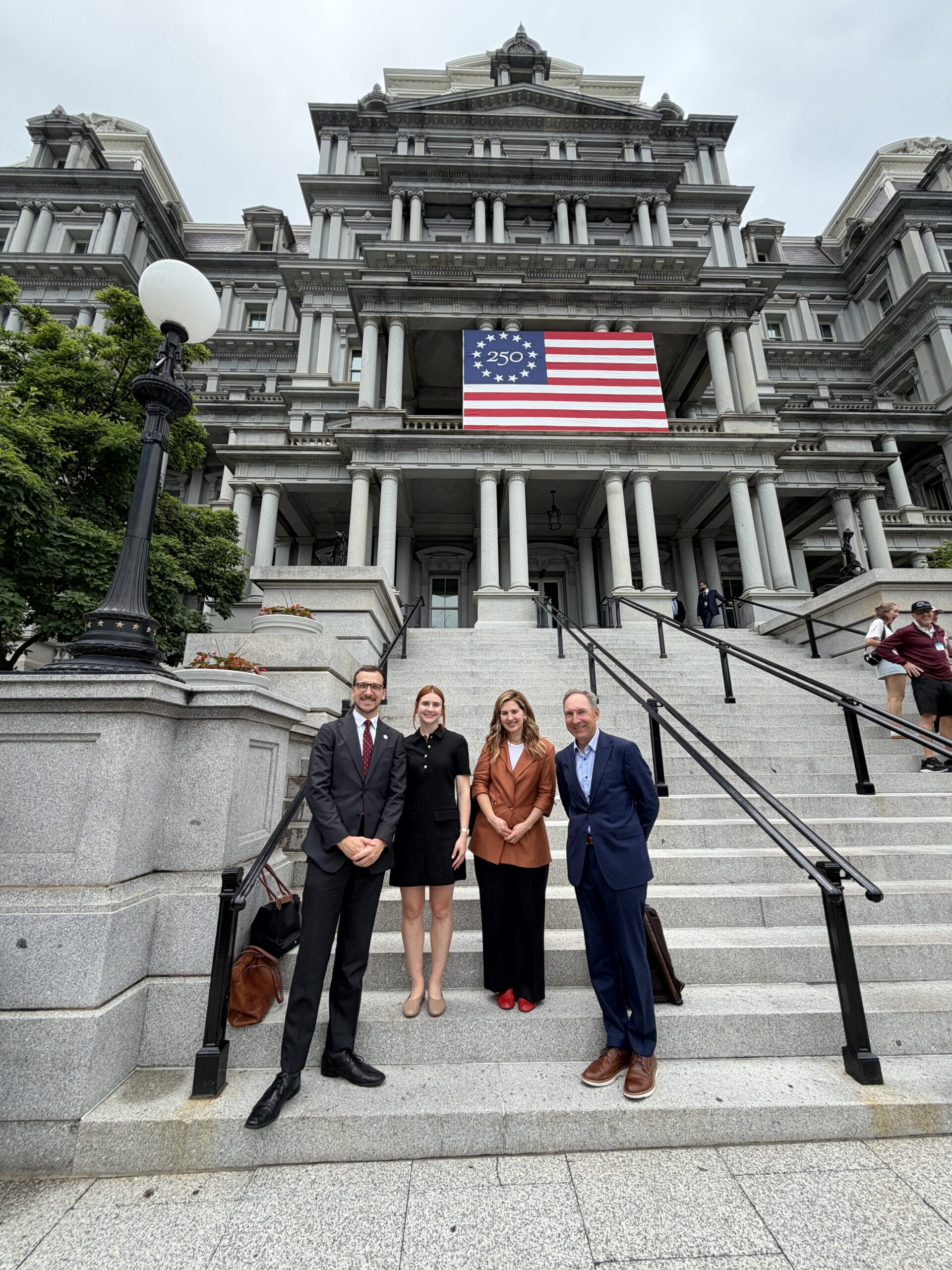
FBA President and CEO Gary Bolton and the FBA Public Policy team closed out the month with a meeting at the White House focused on the growing intersection of AI and fiber infrastructure.
Gary Bolton and the FBA Public Policy Team
Light Byte: Trend of the Month
Celebrating FBA’s Public Policy Leadership
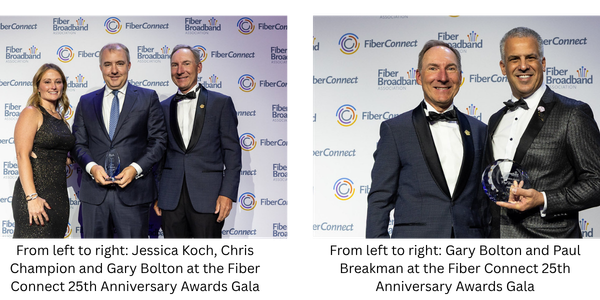
FBA proudly congratulates Public Policy Co-chairs, Chris Champion and Paul Breakman, for their outstanding leadership and contributions to the fiber broadband industry and the Association’s advocacy efforts.
Chris Champion, SVP of Government Relations at C Spire, was recognized with the 2026 FBA Advocacy All-Star Award for his impactful work advancing broadband policy at both the federal and state levels. As Co-Chair of FBA’s Public Policy Committee and leader of the Association’s permitting working group, Chris has helped drive key policy initiatives and strengthen FBA’s advocacy efforts across the industry.
FBA also congratulates Paul Breakman, Vice President of Americas Partners & Business Development at Adtran, on receiving the 2026 Photon Award, which honors exceptional volunteer service and dedication to the Association and the industry. As Co-Chair of FBA’s Public Policy Committee, Paul has played a vital role in supporting collaboration, engagement, and strategic policy discussions across the fiber ecosystem.
Chris Champion, SVP of Government Relations at C Spire, was recognized with the 2026 FBA Advocacy All-Star Award for his impactful work advancing broadband policy at both the federal and state levels. As Co-Chair of FBA’s Public Policy Committee and leader of the Association’s permitting working group, Chris has helped drive key policy initiatives and strengthen FBA’s advocacy efforts across the industry.
FBA also congratulates Paul Breakman, Vice President of Americas Partners & Business Development at Adtran, on receiving the 2026 Photon Award, which honors exceptional volunteer service and dedication to the Association and the industry. As Co-Chair of FBA’s Public Policy Committee, Paul has played a vital role in supporting collaboration, engagement, and strategic policy discussions across the fiber ecosystem.
Policy in the Conduit (Policy & Regulatory Updates)
FCC Expands Router Covered List, Extends Waivers Through 2029
The FCC continues to expand and implement its updated Covered List policy following the agency’s March decision to add routers produced in foreign countries to the list over national security and supply chain concerns. On May 8, the Commission extended existing waivers allowing software and firmware updates for impacted devices through January 1, 2029, providing additional time for providers and manufacturers to transition equipment.
The FCC also granted exemptions for certain Nokia router models through October 31, 2027, following Department of Defense review and approval. Separately, the FCC approved a partial waiver for AT&T, allowing limited hardware modifications to previously certified routers affected by the ban. The evolving implementation process continues to raise questions across the broadband industry around supply chains, compliance timelines, and deployment impacts as providers adapt to the updated restrictions.
FCC Advances Broadband Mapping, and USF Reform, at its May Open Meeting
At its May Open Meeting, the FCC advanced several items impacting broadband deployment, mapping, and network resiliency.
The Commission adopted actions to streamline the Broadband Data Collection (BDC) process by reducing regulatory burdens, improving challenge procedures, and refining audit and verification requirements while maintaining the accuracy of the National Broadband Map. The FCC also launched a High-Cost Modernization initiative, seeking comment on how Universal Service Fund support mechanisms can evolve to ensure rural communities continue to have access to next-generation communications services. Additional actions included updates to the Disaster Information Reporting System (DIRS) aimed at improving emergency response coordination while reducing reporting burdens during disasters, as well as a proposal to strengthen STIR/SHAKEN robocall protections through enhanced oversight requirements for voice providers.
BEAD Progress
NTIA’s BEAD Final Proposal approvals remain at 54 of 56. Illinois and California remain the only states awaiting NTIA approval, despite Illinois submitting its proposal more than seven months ago. In a letter to Lutnick, Pritzker said providers are prepared to begin work on 232 broadband construction projects that would connect more than 383,000 residents, primarily in rural communities.
Pritzker warned that continued delays are increasing costs for providers and slowing economic development, telehealth access, education, and digital connectivity across the state.
For those with full approval, the next step is executing contracts with subgrantees and beginning pre-construction work including permitting and environmental screenings. Subgrantees will then begin construction and deployments on a rolling schedule.
States, territories, and industry stakeholders also await guidance from NTIA regarding the use of BEAD Non-Deployment funds. Despite setting an original March date for release of the guidance, NTIA remains in the development stage. During an appropriations hearing earlier in May, Commerce Secretary Lutnick noted the guidance would be released within the next two months, but NTIA has not confirmed that timeline.
New York Expands Free Broadband Access for Low-Income Residents
New York City Mayor Zohran Mamdani and Rep. Ritchie Torres announced a $2 million expansion of the city’s Neighborhood Internet program, aimed at extending free high-speed broadband access to low-income residents in the Bronx and Upper Manhattan.
The initiative, launched in partnership with the New York Public Library, is expected to support thousands of additional households over the next two years through investments in broadband infrastructure, including rooftop equipment, microtrenching, and in-unit connectivity. Officials framed the effort as part of a broader push to close the digital divide and expand digital equity in underserved communities.
Senators Introduce Bipartisan BEAD Oversight and Permitting Bill
Sens. John Thune, John Barrasso, and Ben Ray Luján introduced the bipartisan Accelerating Broadband Permits Act (S. 4448), legislation to implement smart process improvements and bring transparency to broadband projects.
The bill would direct NTIA to develop tools to better track the progress of BEAD grant recipients as projects move from funding awards into deployment and construction. Supporters say the measure is intended to improve accountability, coordination, and visibility into project timelines as states ramp up implementation.
FBA applauds the introduction of this legislation, emphasizing that greater transparency and streamlined permitting processes are essential to broadband deployment. These reforms will help ensure fiber infrastructure can be deployed more efficiently and rapidly to communities nationwide.
NTIA Urges BEAD Awardees to “Know Your Rights” in State Contracting
NTIA is reminding BEAD award recipients to closely review state subgrant agreements as projects move toward deployment, warning that contracts must remain consistent with federal program requirements.
According to recent NTIA memo, providers should notify federal program officers if proposed agreements alter required BEAD language or fail to include key protections and permitting commitments. The agency emphasized that states risk noncompliance if mandatory provisions are omitted or modified.
The document comes as BEAD projects transition from the award phase into construction and implementation, with states and providers increasingly focused on timelines, permitting, and deployment obligations.
Trump Signs Rural Broadband Protection Act Into Law
President Donald Trump signed the Rural Broadband Protection Act (S. 98) into law, establishing new vetting requirements for applicants seeking support through the Universal Service Fund’s high-cost program.
Led by Sen. Shelley Moore Capito, the legislation directs NTIA to develop a review process evaluating whether funding recipients have the technical and financial capabilities to complete proposed broadband projects. Supporters say the measure will help ensure federal broadband dollars are directed toward providers capable of delivering reliable service to rural communities.
House Appropriators Advance FY27 Bill With Reduced NTIA Funding
The House Appropriations Committee advanced its FY2027 Commerce, Justice, Science funding bill, which would allocate $46 million to NTIA – matching the Trump administration’s budget request but representing an approximately 8% reduction from FY2026 enacted levels.
The proposal comes as NTIA continues overseeing implementation of major broadband initiatives, including BEAD, and reflects broader congressional debates around federal spending priorities and the agency’s long-term role in broadband deployment and infrastructure oversight.
The bill now moves forward in the appropriations process as lawmakers continue negotiations over FY2027 funding levels.
Louisiana and Nebraska Mark First Live BEAD-Funded Connections
Louisiana and Nebraska marked the transition in the BEAD program from planning to deployment, activating some of the nation’s first live BEAD-funded broadband infrastructure.
In Louisiana, Nextlink activated a fixed wireless tower that will soon serve rural communities in Bienville and Bossier Parishes, marking what state officials described as the first live BEAD-funded infrastructure deployment in the country. The milestone follows Louisiana’s earlier firsts in the program, including securing NTIA approval of its Final Proposal and executing subgrant agreements.
Meanwhile, Nebraska provider Vistabeam activated a BEAD-funded broadband connection near Ogallala, Nebraska, after completing environmental review requirements. NTIA Administrator Arielle Roth and Gov. Jim Pillen all attended this announcement.
With many projects left to deploy, efficient permitting and coordination will be critical to keeping projects on track and accelerating deployment nationwide.
Luján Introduces Bill Requiring Automatic Refunds for Network Outages
Sen. Ben Ray Luján introduced the Outage Refund Guarantee Act (S.4557), legislation that would require broadband, telephone, cable, and satellite providers to automatically issue bill credits for service outages lasting longer than four hours.
Under the proposal, customers would receive credits automatically – without needing to contact providers – with compensation tied to the duration of the outage. The bill would also direct the FCC and FTC to develop additional consumer protection requirements related to customer service accessibility, missed service appointments, and equipment return processes.
The measure reflects growing congressional attention on network reliability, outage accountability, and consumer protections as connectivity becomes increasingly essential for work, education, healthcare, and public safety.
Mark Your Calendar
FBA Brings AI and Fiber Policy Discussion to Capitol Hill
Join FBA on June 11 from 12:00-1:00 PM ET for a Capitol Hill Lunch & Learn convening congressional staff and featuring academics and industry experts. The discussion will explore the critical role of fiber broadband infrastructure in enabling AI and next generation technologies, and what it will take for the U.S. to maintain global leadership in an increasingly AI-driven economy. Panelists from industry, policy, and research will examine deployment challenges, infrastructure needs, workforce considerations, and the policy actions needed to accelerate broadband investment and maximize federal programs like BEAD. Location TBA soon.
FBA’s Signature Policy Event – Fiber Day on the Hill
FBA will be on Capitol Hill on July 15-16th for its 4th Annual Fiber Day on the Hill and Public Policy Fly-In. This year’s Fiber Day on the Hill will be an engaging, interactive showcase highlighting the power of fiber broadband, featuring interactive Connected Community displays, Fiber 101 education, live fiber splicing, and the return of the Giga Bites station. Together, these exhibits bring to life how fiber is transforming connectivity, opportunity, and economic growth across the country. We look forward to seeing you there on Thursday, July 16, from 10:00 AM – 2:00 PM in the Rayburn Foyer.
Meet Your Public Policy Team
We welcome your input. Send tips, highlights, and inquiries to Jeanne Le Delaizir.

Marissa Mitrovich
Vice President, Public Policy

Lukas Pietrzak
Director of Public Policy

Tinae Bluitt
Public Policy Manager

Jeanne Le Delaizir
GFiber Public Policy Fellow
Join Us
Make the most of FBA membership – or learn how to join.
Contact us at membership@fiberbroadband.org.
Contact us at membership@fiberbroadband.org.