NTIA Holds Listening Sessions on BEAD Non-Deployment Funds
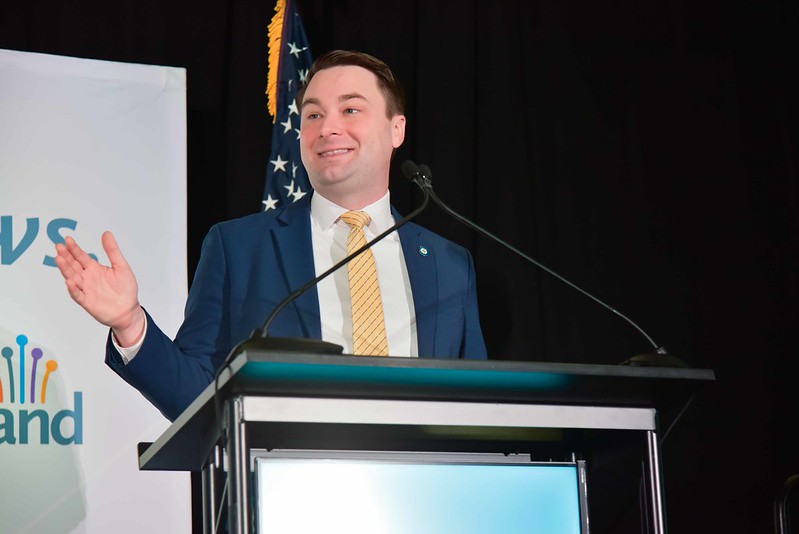
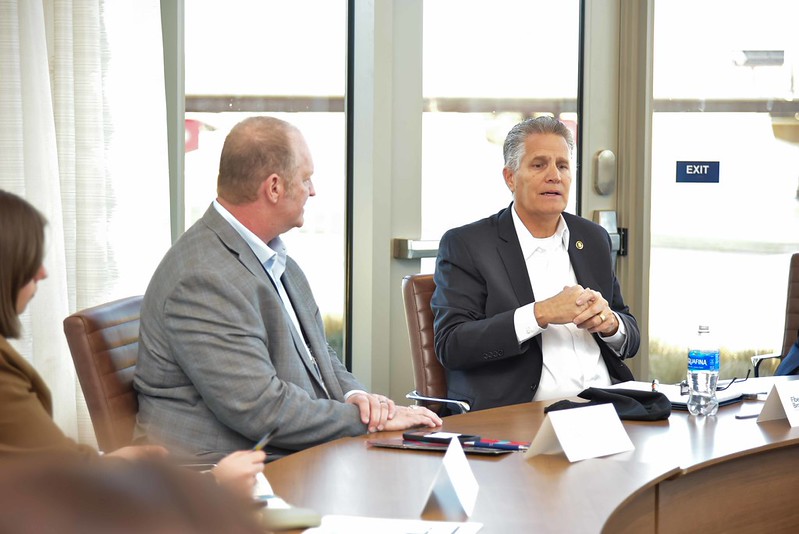
On February 11th and 18th, NTIA hosted two public listening sessions on their forthcoming policy notice regarding BEAD Non-Deployment Funds. With over 1000 attendees on both listening sessions, public input was robust and touched on several familiar and novel approaches to the funds.
- FBA underscored the urgent need to tackle permitting bottlenecks, emphasizing that providers nationwide cite permitting as one of the largest barriers to timely deployment. FBA urged NTIA to direct states to modernize and streamline permitting – from adding staff capacity to digitizing paper records, building public-facing dashboards, and exploring AI-assisted review tools to increase labor and cost efficiencies.
- FBA also communicated a priority for workforce development training and a BEAD cleanup round to ensure no location misses out on high-speed, reliable broadband.
Other attendees echoed FBA’s sentiments and voiced their support for additional initiatives including adoption and affordability, mobile infrastructure, state universal service funds, and more.
Policy Voices on BEAD Non-Deployment Funds
As NTIA evaluates how to allocate roughly $21 billion in BEAD non-deployment funds, lawmakers, states, and industry continue to outline competing priorities.
What we’re hearing:
- Congressional interest is coalescing around public safety. House Communications Subcommittee Chairman Richard Hudson emphasized, on February 4th at Incompas’ policy conference, that non-deployment dollars should support municipalities transitioning to Next Generation 911, framing it as a top national priority.
- Commerce leadership is stressing statutory guardrails. Commerce Secretary Howard Lutnick told the Senate Appropriations Commerce Subcommittee that any use of BEAD non-deployment funds will “follow the law”. He pointed to potential investments such as pole infrastructure and public safety communications networks, while noting Commerce is still evaluating ideas and gathering inputs. He also confirmed unused funds will not revert to Treasury.
- States, nonprofits, and industry offered a wide-ranging list of priorities. During NTIA’s listening sessions, speakers urged support for affordability programs, permitting capacity, workforce needs, education, MDU connectivity, Tribal projects, and improved public safety communications. Others pushed for a reserve fund for unfunded locations or a return of the money to Treasury.
The discussion underscores broad agreement on the need for a menu of options. NTIA anticipates releasing their policy notice by March 11 and FBA will bring an analysis as soon as the notice is public.
BEAD Progress: 50 of 56 States and Territories
BEAD implementation continues to accelerate, with NTIA confirming that 50 of 56 states and territories have now had their Final Proposals approved. Louisiana remains the national frontrunner: its Office of Broadband and Connectivity began issuing BEAD funds to subgrantees, marking the first BEAD dollars to move from planning into deployment.
NTIA Clarifies BEAD Subgrant Agreement Rules
NTIA released updated BEAD FAQ guidance (9.4) clarifying that subgrant agreements cannot override or alter any BEAD statutory or program requirements. The agency underscores that federal law and BEAD rules always govern, and Eligible Entities are not required to accept contractual proposals – including those limiting their discretionary authority. NTIA also reaffirmed that subgrantees must deliver qualifying broadband (100/20 Mbps, ≤100 ms latency) without placing obligations on subscribers.
Read the full NTIA FAQ Update.
The House Agriculture Committee Introduced the 2026 Farm Bill
On February 13th, House Agriculture Committee Chairman Glenn “GT” Thompson (PA-15) introduced the Farm, Food, and National Security Act of 2026 (Farm Bill). The bill would codify and provide funding for the USDA’s ReConnect program, which is supported by FBA membership. Federal programs like ReConnect play a critical role in expanding broadband to unserved and underserved areas. Congress has not enacted a comprehensive Farm Bill since 2018. The law has been extended twice, with the current extension scheduled to expire on September 30, 2026. As a result, the program’s speed metrics are outdated and do not match the FCC and NTIA’s baseline definition of “served” at 100/20 Mbps. FBA urges inclusion of Reconnecting Rural America Act language that would raise the ReConnect baseline to 100/100 Mbps symmetrical buildout speeds. This would provide a strong foundation for broadband grants, helping to ensure that the needs of all Americans are met. The bill is scheduled for markup in the House Agriculture Committee on Monday, March 2nd, but many steps and hurdles remain ahead of enactment, including the possibility of a separate version introduced by the Senate Agriculture Committee later this year.
Senate Commerce Committee Advances MAP for Broadband Funding Act
The Senate Commerce, Science, and Transportation Committee passed the Modernization, Accountability and Planning (MAP) for Broadband Funding Act (S. 2585), bipartisan legislation to strengthen oversight of the FCC’s Broadband Funding Map – the key tool that tracks where federal broadband dollars are being spent. The bill, sponsored by Sen. Deb Fisher (R-NE) and Catherine Cortez Masto (D-NV), would require a review to improve the map’s usability and direct the Government Accountability Office to assess whether federal funding data is consistently reported.
See full bill here.
House Natural Resources Committee Advances Broadband Deployment Bill
The House Natural Resources Committee advanced the Enhancing Administrative Reviews for Broadband Deployment Act (H.R. 5419), bipartisan legislation aimed at accelerating broadband expansion in rural and Tribal communities by targeting key regulatory bottlenecks. The bill would require federal agencies to identify barriers delaying communications permit reviews and submit a plan to Congress to improve staffing and interagency coordination, helping move projects from planning to construction more efficiently. The measure now heads to the full House for further consideration.
See full bill here.
AI is Outpacing U.S. Broadband Policy, ACI Says
The American Consumer Institute (ACI) released a report warning that the nation’s broadband ecosystem is not prepared for the surge in traffic driven by AI adoption. ACI urged federal and state policy makers to accelerate copper retirement, streamline NEPA and permitting reviews, and modernize carrier-of-last-resort rules.
See full report here.