
Make the most of FBA membership – or learn how to join.
Contact us at membership@fiberbroadband.org.
Powering the Network (Out & About)
Fiber Leaders Meet with Congress During FBA Fly-In
FBA hosted its summer fly-in on July 15, 2026, in Washington, D.C. to bring together policymakers, congressional staff, and industry leaders to discuss the role of fiber in strengthening America’s economic and technological future.
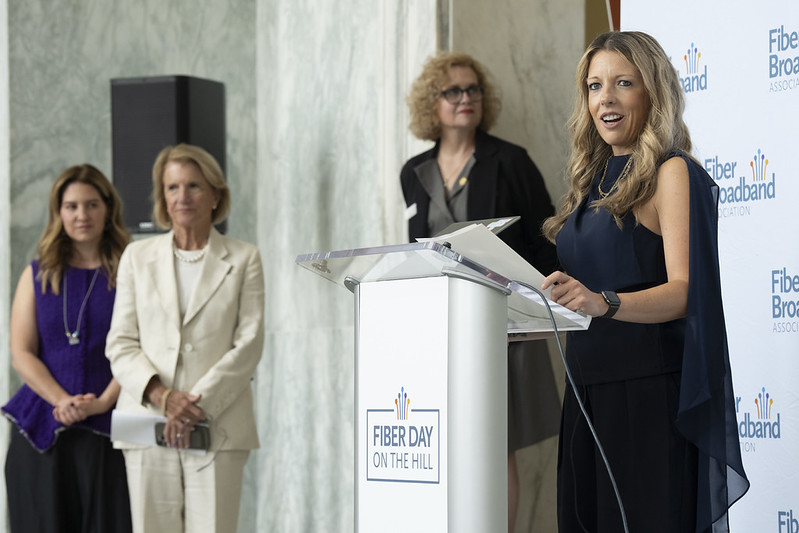
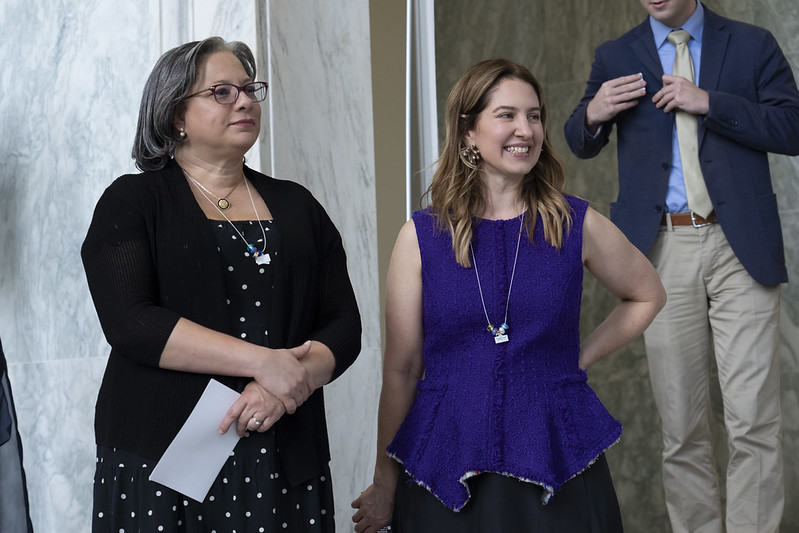
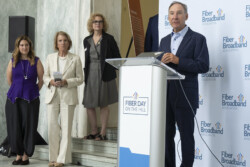
The fly-in began with remarks from Representative McClain Delaney (D-MD), who highlighted the importance of federal investments, including the BEAD program, and continued collaboration between policymakers and the fiber broadband industry to expand high-speed, reliable connectivity nationwide.
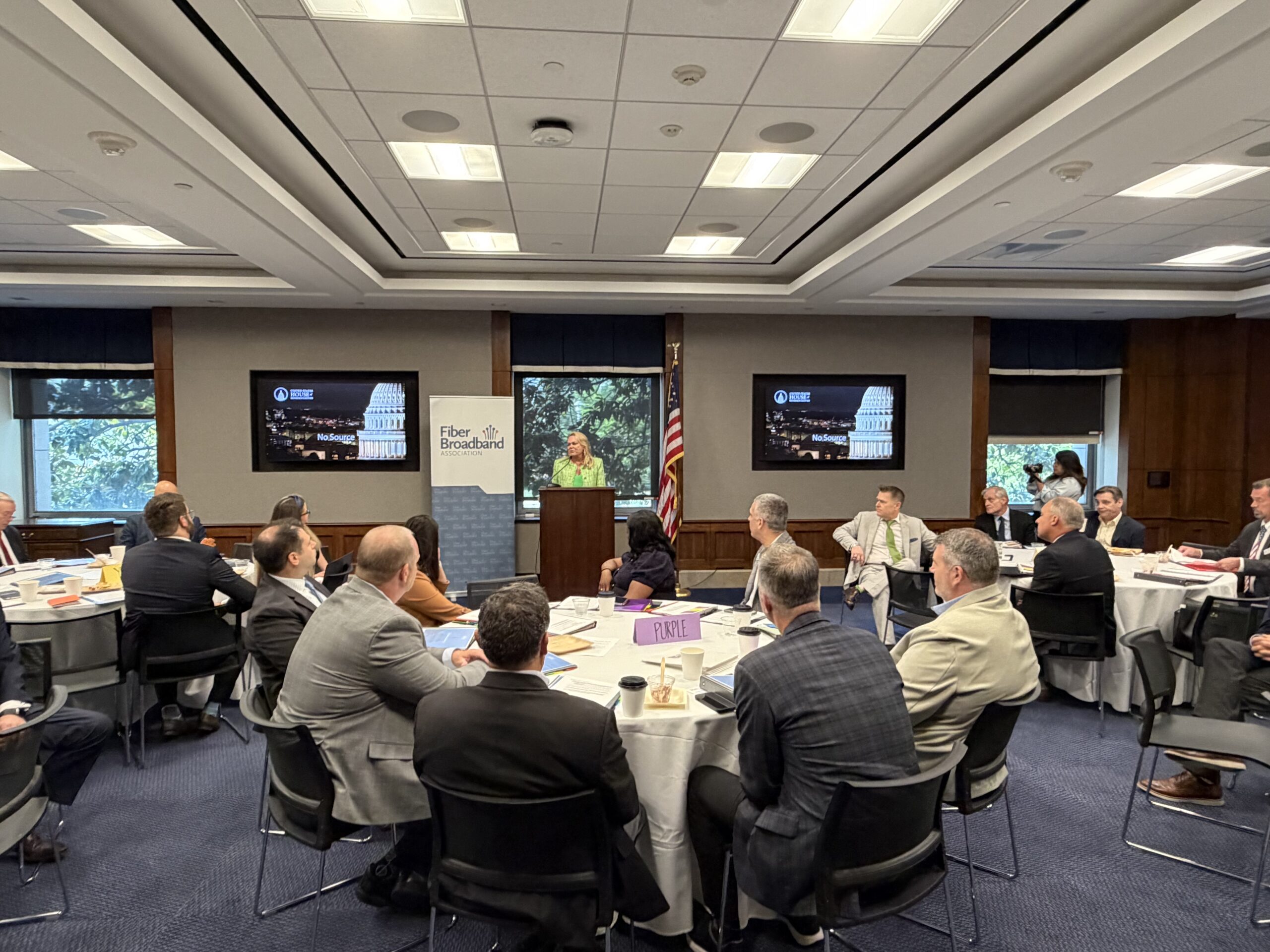
Rep. McClain Delaney (D-MD) giving remarks
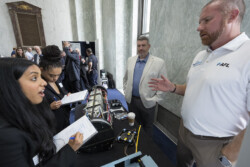
On Capitol Hill, 32 FBA members representing 23 organizations, along with staff and advocacy partners, met with 28 bipartisan, bicameral congressional offices to discuss key industry priorities, including:
- Fiber as essential infrastructure for artificial intelligence and emerging technologies;
- Expanding reliable broadband access to rural and underserved communities; and
- Reducing permitting barriers and increasing transparency to accelerate fiber deployment nationwide.
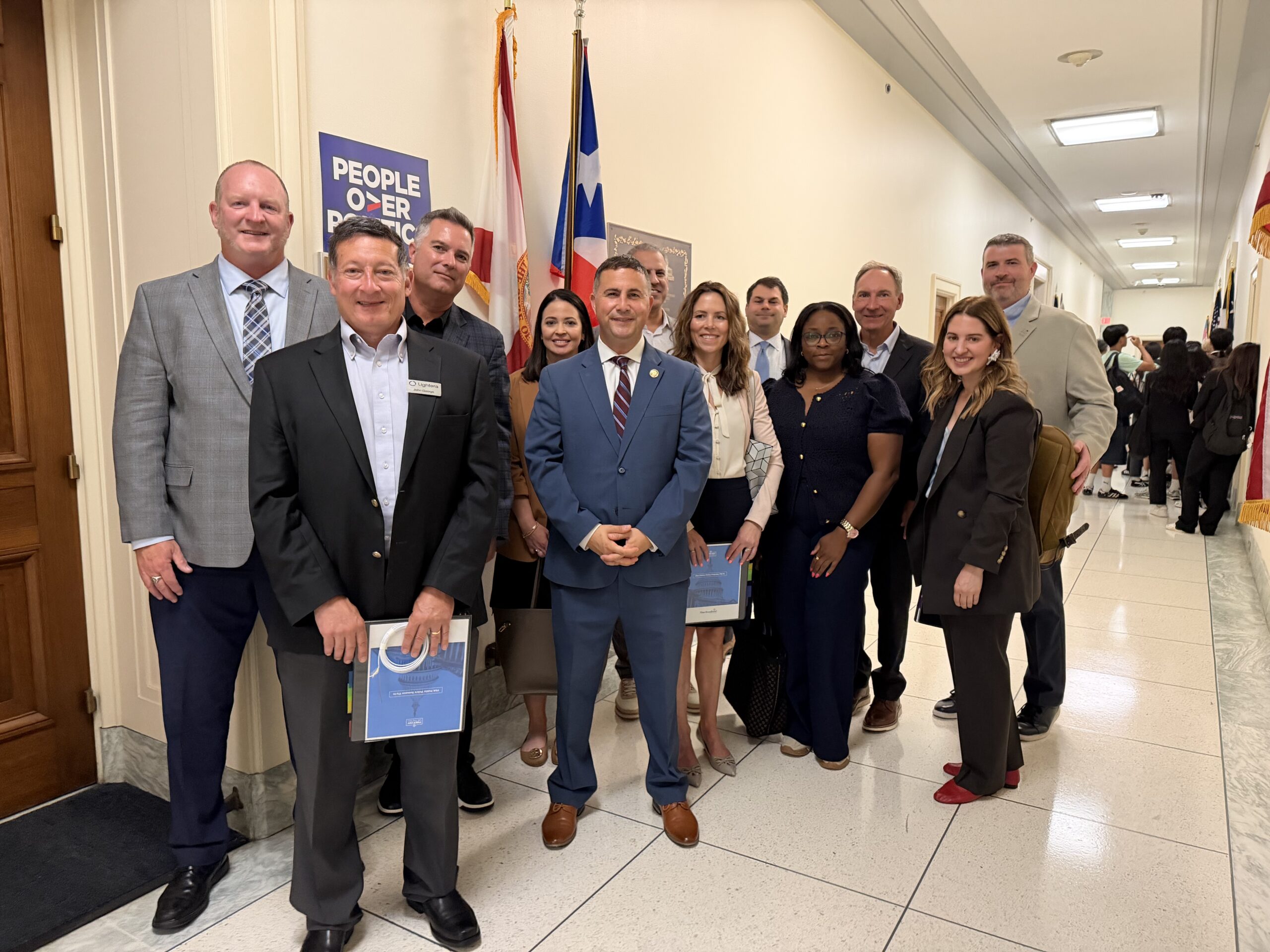
FBA members meeting with Rep. Darren Soto (D-FL)
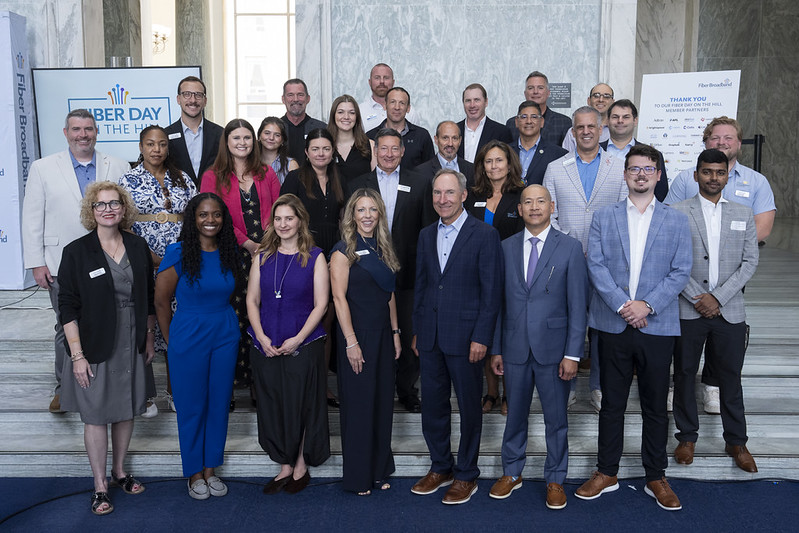
FBA’s Annual “Fiber Day on the Hill” Brings Industry to Washington
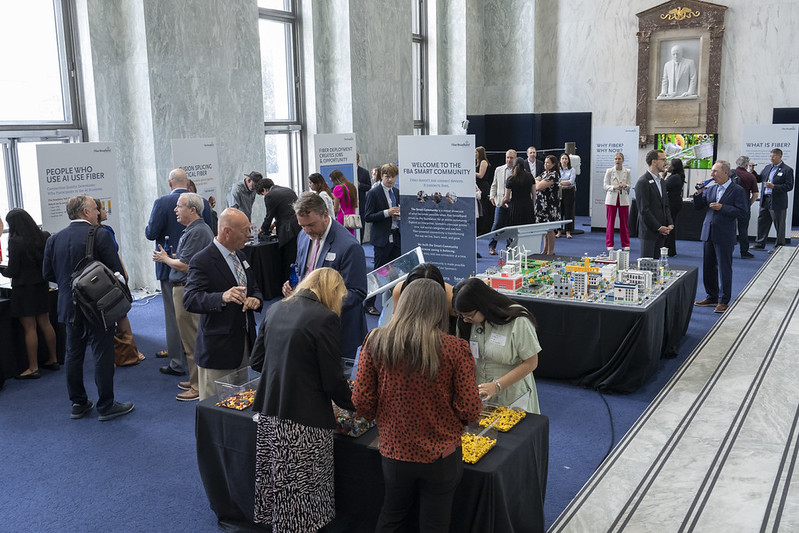
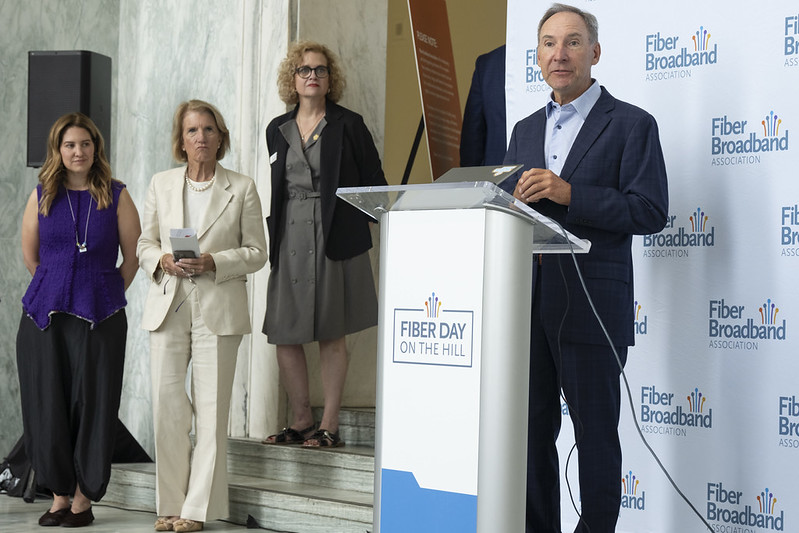
FBA’s 4th Annual Fiber Day on the Hill, held on July 16, 2026, was supported by bipartisan, bicameral Honorary Co-Chairs Senators Shelley Moore Capito (R-WV) and Jacky Rosen (D-NV), along with Representative McClellan (D-VA). The event provided nearly 300 policymakers and congressional staff with an educational opportunity to explore the technology, workforce, and innovation driving the future of fiber connectivity.
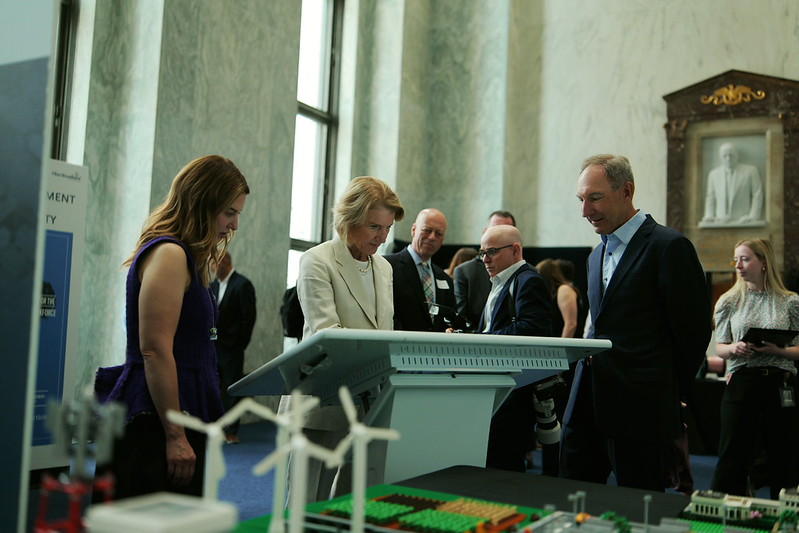
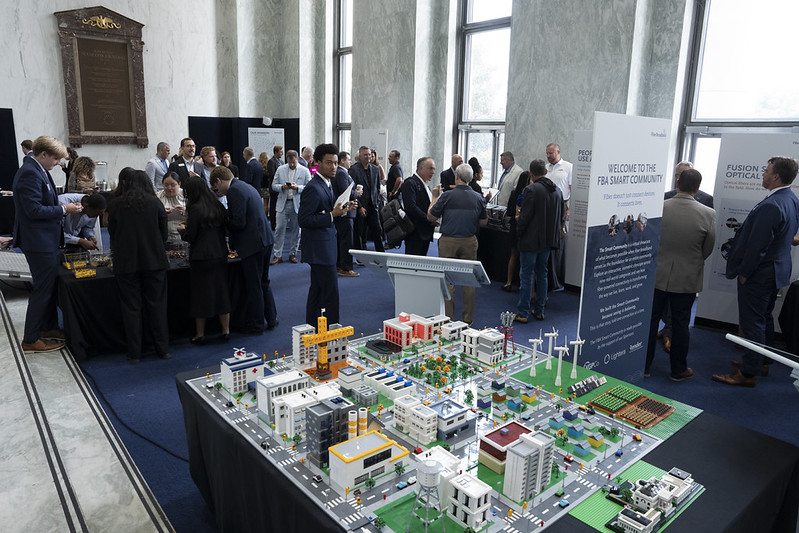
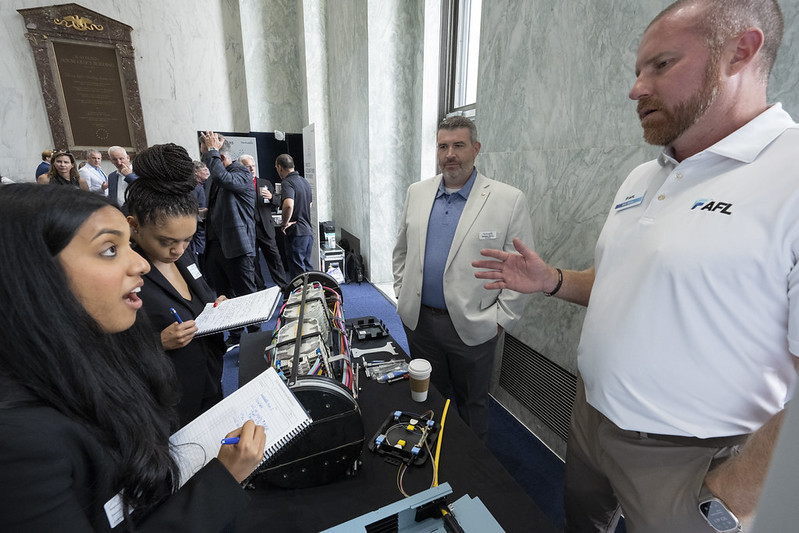
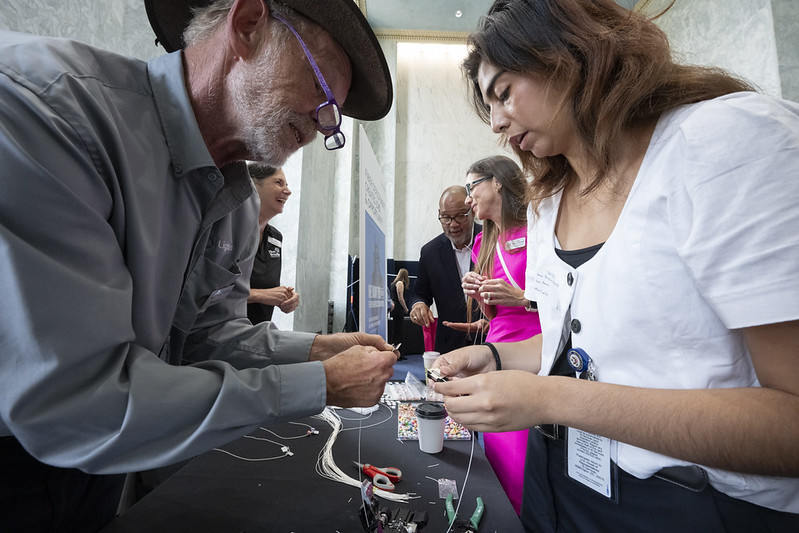
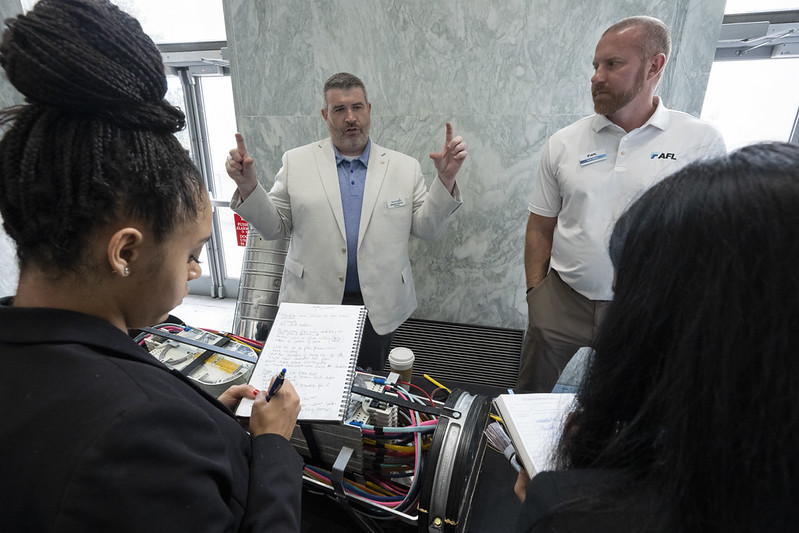
Participants engaged with an interactive smart community exhibit demonstrating how fiber networks support smart cities, connected homes, healthcare, education, public safety, and economic development. Congressional staff also took part in a hands-on fiber splicing activity at the workforce development station, creating fiber necklaces while learning about the skills needed to build next-generation networks.






Policy Lab – Bozeman, MT Edition
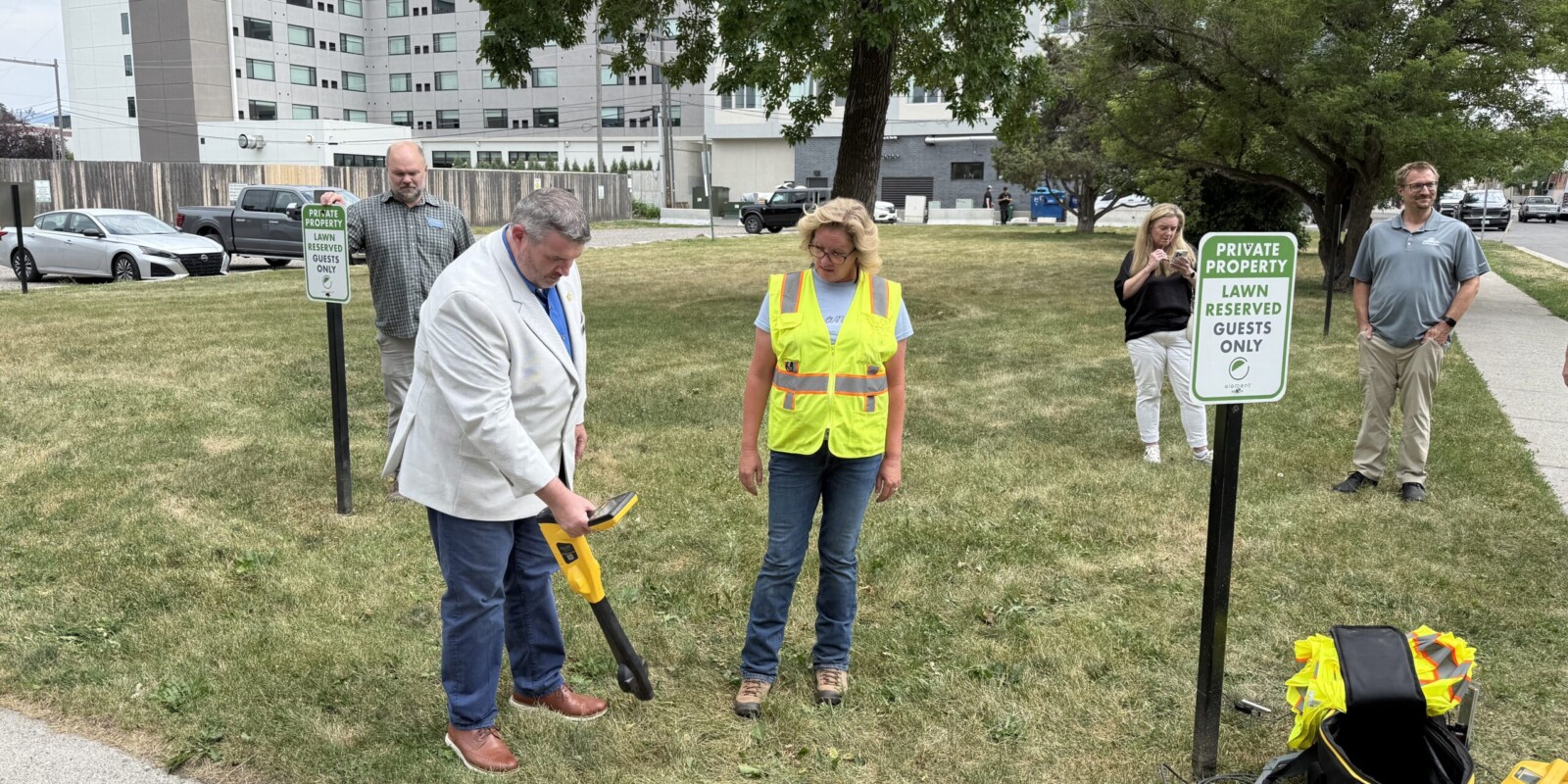
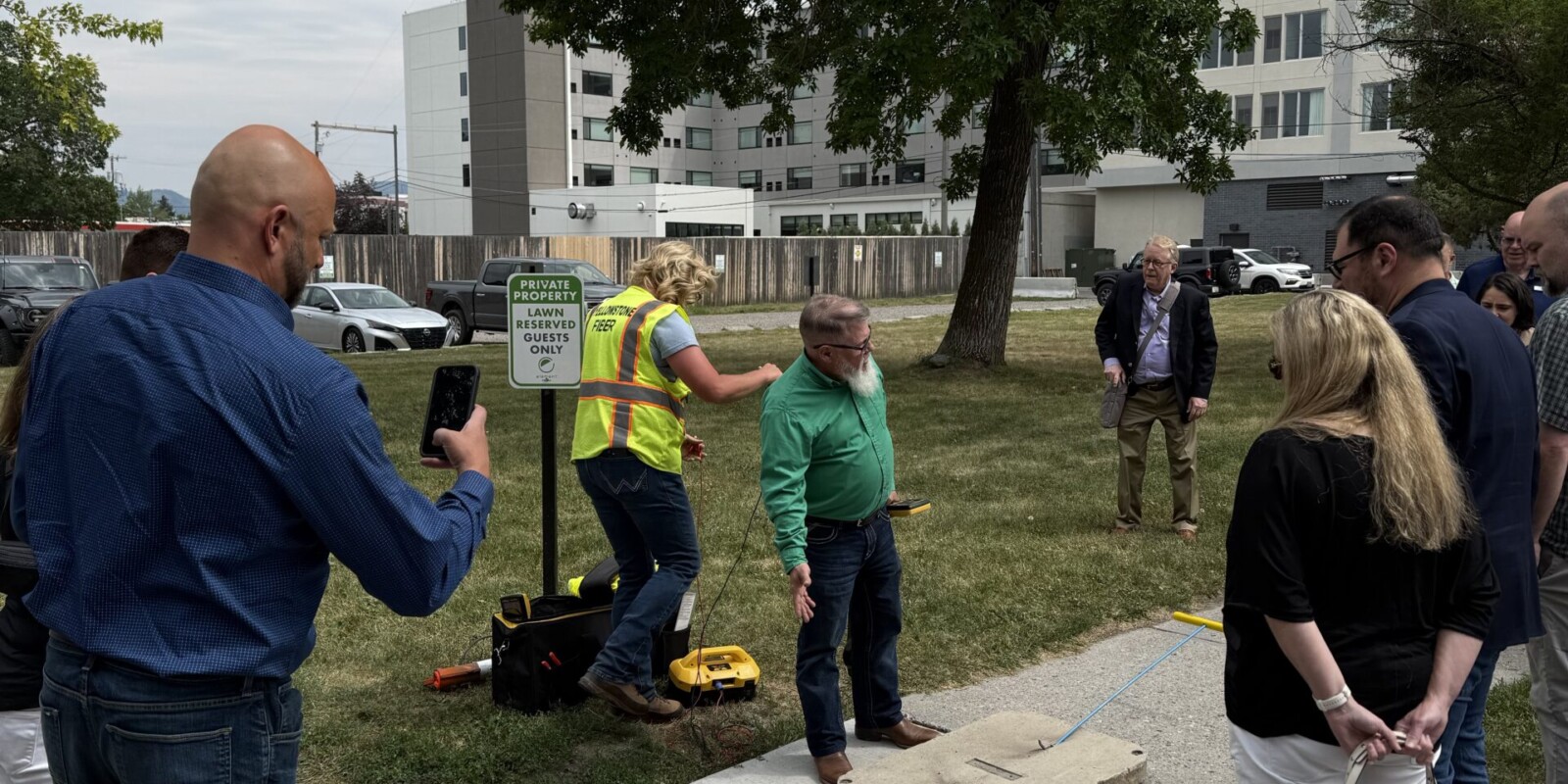
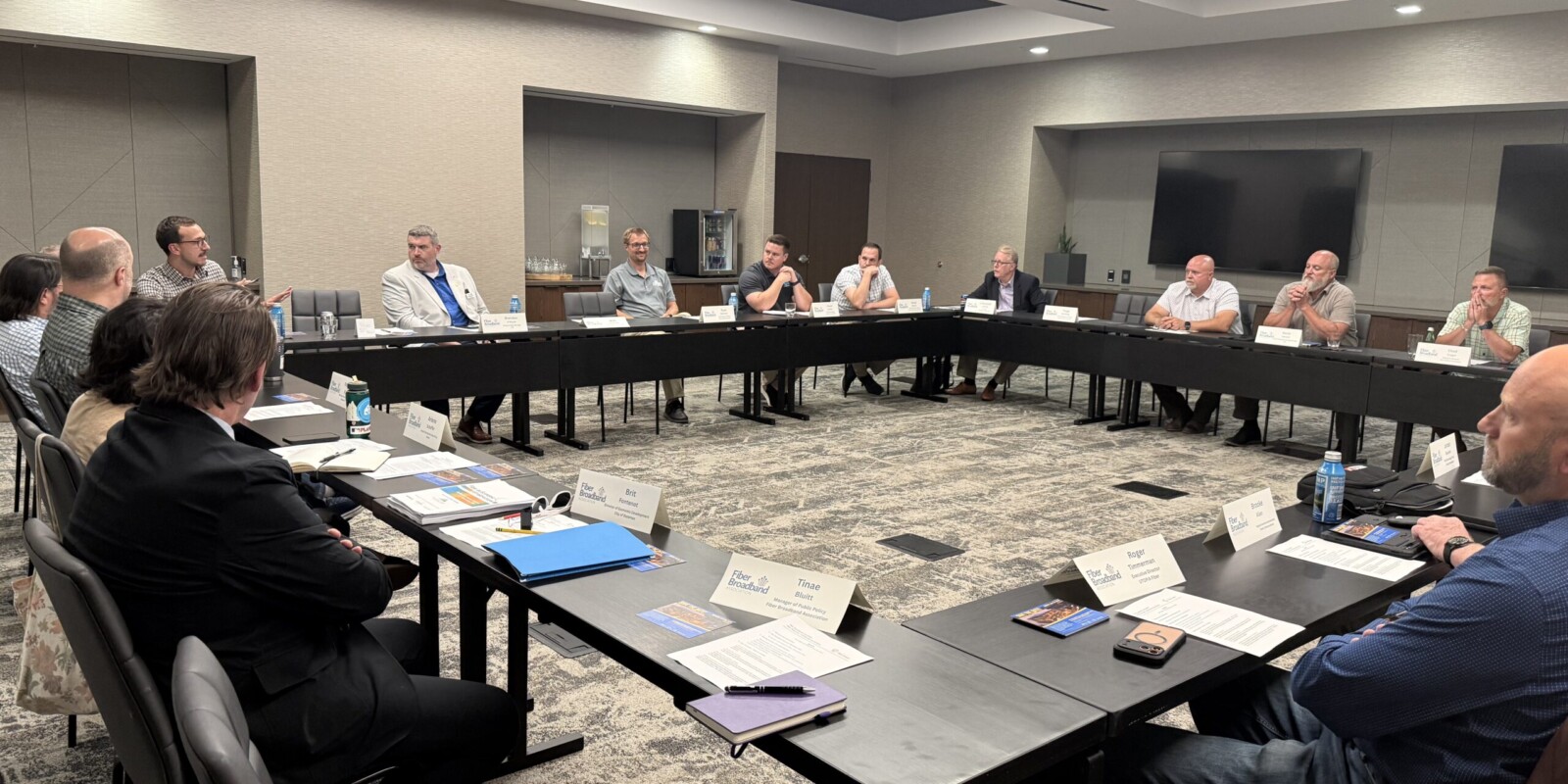
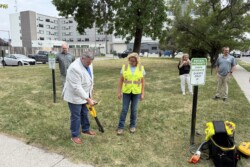
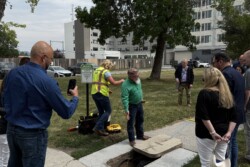
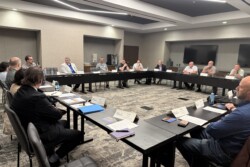
On July 20, FBA convened state, local, and industry leaders in Bozeman for our Third Fiber Policy Lab roundtable, “Community Connections: How Fiber Can Power Local Relationships.” Attendees got a firsthand look at Yellowstone Fiber’s utility locating tools before hearing from State Representative Kelly Kortum (District 64 – Bozeman), Bozeman Economic Development Director Brit Fontenot, and Christopher Mitchell of the Institute for Local Self-Reliance on what’s driving successful public-private partnerships across Montana – and where the state’s model offers lessons for the rest of the country. The group dug into permitting, trust-building, and how to spread best practices beyond the communities that pioneered them, closing with a candid look at what collaboration needs to look like as BEAD funding tapers off.

Light Byte
Brick by Brick
The LEGO replica fiber town at Fiber Day on the Hill reminded us that building connected communities takes many pieces working together. Accompanied by interactive, educational, digital displays of fiber in your community, Hill staff created Lego avatars and jumped into fiber town, many of them hanging out at the Lego “White House.” With Congress heading home for the August recess, lawmakers have the chance to see the real-world impact of broadband investments in the communities they represent, where policy becomes progress one connection at a time.
Policy in the Conduit (Policy & Regulatory Updates)
FEDERAL POLICY
OMB Proposed Revisions to Federal Grant Administration Draws Scrutiny
The Office of Management and Budget’s (OMB) proposed revisions to 2 CFR Part 200, the Uniform Guidance governing federal grant administration, continue to draw scrutiny from both industry stakeholders and Congress. The proposal could affect major federal broadband programs, including BEAD, by changing how grants are administered and overseen.
FBA submitted comments supporting OMB’s efforts to modernize the rules while urging the agency to preserve fixed amount subawards and limit expanded authority to terminate or suspend awards without a clear appeals process. The Association warned that the proposed changes could increase compliance burdens, discourage participation by small- and mid-sized broadband providers, and create uncertainty for broadband infrastructure investments.
Separately, Senate Appropriations Committee Chair Susan Collins (R-ME) urged OMB to reconsider the proposal, calling for a more deliberate approach to revising the government-wide grant rules that underpin billions of dollars in federal financial assistance programs.
View FBA’s comments to OMB.
NTIA Revisits Eligible BEAD Locations Following Updated Broadband Maps
The National Telecommunications and Information Administration (NTIA) has directed states to review BEAD awards made to satellite providers after updated FCC broadband mapping data showed that many previously eligible locations are now served by terrestrial broadband or are no longer eligible for funding. According to state officials, some states may need to reduce satellite awards by as much as 50 percent.
Independent analysis by the Advanced Communications Law & Policy Institute (ACLP) estimates that 35 percent of locations awarded to satellite providers are no longer eligible under current broadband data, with that figure rising to 42 percent when locations served by unlicensed fixed wireless are included. The analysis estimates that removing those locations could reduce BEAD spending on satellite awards by at least $354 million.
Federal Judge Signals Digital Equity Funding Could Be Restored
A federal judge indicated that the Commerce Department is expected to reinstate at least $1.25 billion in canceled Digital Equity Act grant funding after denying the Trump administration’s motion to dismiss a lawsuit challenging the funding cancellation. The judge said a previous ruling striking down one provision of the law would allow the program to move forward.
NTIA Approves California BEAD Final Proposal, Illinois Remains in Review
On July 17, NTIA announced the approval of California’s BEAD Final Proposal. Following additional required reviews by NIST, another Department of Commerce agency, the state will begin the process of finalizing grant agreements with provisional awardees and conducting pre-construction processes. Illinois is now the only remaining state that is awaiting Final Proposal approval by NTIA.
CONGRESS
NTIA Provides BEAD Implementation Update, Targets Summer Guidance
National Telecommunications and Information Administration (NTIA) Administrator Arielle Roth told House lawmakers it now expects to release long-awaited guidance on the use of more than $21 billion in remaining BEAD funding “this summer”, after previously indicating the guidance would be issued in June. Administrator Roth said during a House Energy & Commerce Committee oversight hearing that the agency is proceeding cautiously as it reviews stakeholder feedback and works to ensure the funding is used effectively.
Roth also provided an update on BEAD implementation, noting that most states and territories have now executed grant agreements with NTIA and are advancing toward deployment. She acknowledged that a small number of BEAD awards have been declined by winning providers, requiring states to identify replacement projects, but said those changes affect only about one percent of eligible locations. Roth also noted that five states have signed BEAD grant agreements with satellite providers, including SpaceX and Amazon.
The hearing also highlighted several ongoing implementation issues. NTIA said it does not anticipate waiving BEAD’s domestic manufacturing requirements for fiber, expressing confidence that U.S. manufacturers will be able to meet demand.
Senators Introduce Bill to Improve FCC Broadband Maps
Senate Majority Leader John Thune (R-SD), Sen. John Fetterman (D-PA), and Sen. Deb Fischer (R-NE) introduced the Broadband Mapping Accurate Providers (MAP) Act, which would require the FCC to review and modernize its broadband mapping process. The legislation directs the Commission to evaluate its map update procedures, challenge process, and how potential changes could affect broadband funding decisions and ongoing mapping efforts.
Senate Committee Advances BEAD Transparency Bill
The Senate Commerce Committee advanced the Accelerating Broadband Permits Act (S.4448), which would require the NTIA to create a public dashboard tracking BEAD projects using states’ semiannual reports. The bill would also direct NTIA to develop a tool to help state broadband offices identify and track the federal permits required for BEAD-funded projects.
House Lawmakers Back National Broadband Strategy Bill
House Communications and Technology Subcommittee members voiced bipartisan support for the Proper Leadership to Align Networks for Broadband (PLAN for Broadband) Act (H.R. 2805) during a legislative hearing. The bill would require the White House to develop a national broadband strategy to better coordinate federal broadband programs, building on recommendations made by the Government Accountability Office (GAO).
Lawmakers cited the need for a government-wide approach to broadband deployment and questioned whether the current landscape of roughly 130 federal broadband programs remains necessary following the rollout of the BEAD program. GAO officials said a national broadband strategy could help determine whether federal broadband initiatives should be consolidated or better aligned.
FCC
States Push Back on FCC Pole Attachment Review
States with certified authority over pole attachment regulation are pushing back on the FCC’s review of state oversight, arguing the Commission lacks authority to reevaluate their “reverse-preemption” status or require additional certification. Several state regulators warned that federal intervention could disrupt ongoing broadband deployment and undermine regulatory frameworks tailored to local needs.
Broadband providers and industry groups, however, argued that many state rules are outdated or lack timely dispute resolution processes, creating delays for broadband deployment. In comments filed with the FCC, FBA urged the Commission to obtain a more complete picture of state pole attachment regulations by requiring updated certifications that include relevant laws, regulations, and complaint procedures.
View FBA’s comments to the FCC.
FCC Adopts Covered List Order, Advances Supply Chain Security Measures
The FCC approved a Third Report and Order and Third Further Notice of Proposed Rulemaking (FNPRM) to strengthen its equipment authorization program against national security risks. The Order closes the “component part loophole” by prohibiting the authorization of devices containing logic-bearing hardware components produced by companies on the agency’s Covered List. The July action follows a separate May Notice of Proposed Rulemaking that seeks comment on rules to prospectively exclude Covered List entities from receiving blanket domestic Section 214 authority to provide telecommunications services.
Before the vote, industry groups urged the FCC to narrowly tailor the new requirements, warning that overly broad definitions and compliance obligations could increase costs and create implementation challenges. In response, the Commission extended compliance deadlines, added exemptions for small sellers, used devices, and existing listings, and clarified several implementation requirements. The Third FNPRM also seeks comment on additional supply chain security measures, including hardware and software bills of materials (HBOM/SBOM) and a potential requirement for a U.S.-based liable party for certified equipment.
FCC Launches Review of Universal Service Administration
The FCC has launched its first comprehensive review of the Universal Service Administrative Company (USAC) since designating it as the permanent administrator of the Universal Service Fund (USF) in 1998. The proposed rulemaking seeks comment on USAC’s administrative processes, governance structure, operating costs, and long-term role in managing the more than $9 billion USF program.
The proceeding, circulated by FCC Chairman Brendan Carr and scheduled for consideration at the Commission’s August 6 meeting, is part of the FCC’s broader review of the USF. Carr said the proposal aims to improve oversight, reduce administrative costs, and increase accountability in USF administration.
STATES
California Approves $52 Million for Broadband Expansion
The California Public Utilities Commission (CPUC) approved more than $52 million to expand broadband access in unserved communities, including nearly $50 million for tribal broadband projects in San Diego County and $3 million for deployments in Humboldt, Inyo, and Siskiyou counties. Together, the projects will connect more than 1,000 currently unserved locations.
The Commission also established a new direct loan option under its Broadband Loan Loss Reserve Program to help infrastructure projects continue moving forward if federal grant funding is delayed.
Oregon Completes BEAD Rebid
Oregon has completed the reassignment of BEAD locations declined by provisional awardees, selecting new providers to ensure all eligible locations remain covered under the state’s broadband deployment plan. More than 5,000 of the reassigned locations were awarded to Amazon LEO.
California Advances BEAD and Middle-Mile Broadband Buildout
California received federal approval for its BEAD final proposal, allowing the state to move forward with awarding broadband deployment funds. Compared to its draft plan, the final proposal reduced locations assigned to low Earth orbit (LEO) satellite providers by nearly half, while planned fiber and fixed wireless deployments remained largely unchanged.
Separately, Gov. Gavin Newsom announced that California has completed construction on 1,250 miles of its middle-mile fiber network, with work underway on an additional 4,299 miles toward the project’s planned 8,100-mile buildout.
New Mexico Launches Rulemaking for State Broadband Affordability Program
The New Mexico Public Regulation Commission (NMPRC) has opened a rulemaking to implement the state’s Low-Income Telecommunications Assistance Program, which would replace the expired federal Affordable Connectivity Program (ACP). The proposed program would provide a $30 monthly broadband subsidy for most eligible households and $70 per month for eligible households on Tribal lands.
Under the proposed rules, broadband providers would notify customers about the program, verify eligibility through a federal database, apply the discount directly to monthly bills, and seek reimbursement through the State Rural Universal Service Fund. Initial comments are due September 11, with reply comments due September 21.
Colorado Seeks Input on Statewide Middle-Mile Broadband Strategy
The Colorado Broadband Office (CBO) is seeking public comment on its draft Middle Mile Due Diligence and Strategic Roadmap Report, which concludes that the state’s fragmented middle-mile networks limit efficiency despite being operated by capable teams. The report recommends creating a working group to develop a statewide strategy, followed by a coordinating consortium for regional networks, and ultimately consolidating the independent systems under a single statewide governing board while completing remaining middle-mile infrastructure buildout. Comments are due August 7.
Mark Your Calendar
Join Us in Omaha, NE on August 24 for the Next Fiber Policy Lab
FBA will host its Fourth Fiber Policy Lab on Monday, August 24 in conjunction with the Omaha Regional Fiber Connect, which takes place on August 25. The Fiber Policy Lab will give local, state, federal, and industry leaders the opportunity to discuss challenges in the Midwest and how fiber can power the future of precision agriculture and advanced farming. If you are interested in attending the policy lab, out to Lukas Pietrzak at LPietrzak@fiberbroadband.org.
In Memoriam – Remembering Anisa Latif Green
We are saddened to share the passing of Anisa Latif Green, who served as Director of Federal Regulatory and Chief of Staff to the EVP of Federal Regulatory Relations at AT&T. Anisa had a way of lighting up a room, and her voice resonated with everyone she worked alongside. FBA was fortunate to know her. Marissa Mitrovich, FBA VP of Policy, recalls joining her for a wireless panel in New York last fall and having the opportunity to spend time with her and one of her sons afterward—a photographer in Brooklyn who was as warm and full of life as his mother, and clearly proud of the regard she’d earned across our telecom community. A memorial fund has been established for those who wish to honor her memory.

New York State Wireless Association featuring Anisa Green and Marissa Mitrovich
We welcome your input.
Meet Your Public Policy Team

Marissa Mitrovich
Vice President, Public Policy

Lukas Pietrzak
Director of Public Policy

Tinae Bluitt
Public Policy Manager

Jeanne Le Delaizir
GFiber Public Policy Fellow