BEAD Progress: 53 of 56 States and Territories
BEAD implementation continues to move forward, with 53 states and territories now having their Final Proposals approved by NTIA. The latest approval came for Alabama’s $460 million plan, which includes 63 projects aimed at expanding high-speed broadband statewide. According to the state, 71% of projects will deploy fiber, with the remainder relying on low-earth orbit satellite (24%) and hybrid fiber-coaxial technology (5%). Comcast and AT&T are among the largest recipients of the funding.
State leaders say the milestone moves projects closer to construction as the BEAD program transitions from planning to deployment.
FCC Advances Copper Retirement Rules
The Federal Communications Commission voted at its March Open Meeting to streamline rules governing the retirement of legacy copper networks, part of Chairman Brendan Carr’s broader Build America agenda. The order simplifies regulatory requirements tied to technology transitions and copper network discontinuance, aiming to free up billions in capital for investment in modern high-speed infrastructure.
The FCC emphasized that the transition must maintain public safety safeguards and 911 continuity, while industry groups broadly view the move as an important step toward accelerating next-generation network deployment.
FBA welcomed the decision, noting that modernizing outdated copper rules helps clear the path for greater investment in fiber infrastructure capable of supporting today’s digital economy.
FCC Adds Foreign-Made Routers to Covered List
On March 23, the FCC updated its Covered List to include certain foreign-produced consumer-grade routers, citing national security concerns. Equipment placed on the list is prohibited from receiving FCC equipment authorization, which effectively prevents new devices from being imported, marketed, or sold in the United States.
The action follows determinations by national security agencies under the Secure and Trusted Communications Networks Act, which directs the FCC to identify communications equipment that may pose risks to U.S. infrastructure and supply chains.
The FCC emphasized that the update does not affect routers already approved or currently in use, and existing devices may continue to be sold or operated.
See FCC Public Notice, Fact Sheet, and FAQ.
NTIA Delays Guidance on BEAD Non-Deployment Funds
NTIA has delayed the release of its long-anticipated guidance on how states can use an estimated $21 billion in BEAD non-deployment funds. The policy notice was widely expected between March 6–9, but the agency has postponed the update as it continues reviewing stakeholder input.
The delay has drawn attention on Capitol Hill. Senate Communications Subcommittee Ranking Member Ben Ray Luján (NM) called for congressional scrutiny of the decision, while lawmakers from both parties emphasized the importance of providing clarity so states can plan next steps.
Stakeholders have proposed a range of potential uses for the funds, including permitting modernization, Next Generation 911 upgrades, workforce development, mobile connectivity, and digital skills programs. NTIA says guidance will be released “as soon as possible.”
Bipartisan Governors Request Extension for Treasury’s Capital Projects Fund
In a recent letter to US Treasury Secretary Bessent, a group of bipartisan governors from Colorado, Connecticut, Indiana, Kentucky, Maryland, Michigan, Mississippi, North Carolina, Oregon, and Washington called for the department to release guidance that allows for extensions to CPF’s December 31, 2026 deadline. The current deadline, set by the American Rescue Plan Act, requires funds be expended by the end of this calendar year. The governors are calling for a one year extension to allow states to properly utilize the funds for capital projects. FBA continues to work with the Treasury Department on the issue to ensure fiber broadband projects remain funded and are completed.
House Subcommittee Reviews the Telecommunications Act at 30-Year Mark
The House Energy and Commerce Communications and Technology Subcommittee held a hearing on March 26 marking the 30th anniversary of the Telecommunications Act of 1996 and examining whether the landmark law should be updated to reflect today’s communications landscape.
Subcommittee Chairman Richard Hudson (R-NC) emphasized the need for modernization, stating that “Congress needs to consider how we should modernize our communications policy framework to reflect the technologies of today in a way that will also work for the technologies of tomorrow.” Ranking Member Frank Pallone (D-NJ) highlighted the law’s original goal of expanding connectivity, noting that “Congress intended the Telecommunications Act to ensure that all Americans have access to advanced communications services like broadband.”
Lawmakers indicated the hearing is an early step in what could become a broader congressional effort to reassess and update the nation’s core communications framework.
USF Contribution Factor Proposed at 37% for Q2
The FCC’s Office of Managing Director has proposed a 37% Universal Service Fund (USF) contribution factor for Q2, slightly down from 37.6% in Q1. If the Commission does not act within 24 days, the proposed factor will automatically take effect.
The contribution factor determines the percentage telecommunications providers contribute to support federal universal service programs.
White House Proposes National AI Regulatory Framework
The White House released a national legislative framework for artificial intelligence, calling on Congress to establish a single nationwide standard for AI regulation. The proposal argues that AI development is inherently interstate and warns that a patchwork of state rules could undermine U.S. innovation and global competitiveness.
The framework also links AI policy to infrastructure and energy considerations, encouraging Congress to streamline permitting for AI infrastructure and address power demand tied to data center growth. It further notes that federal policy should address AI-enabled fraud and online safety protections for children.
Industry groups largely welcomed the proposal, saying a national standard would provide regulatory clarity. Consumer and privacy advocates, however, criticized the framework’s preemption of state AI laws, arguing it prioritizes innovation over safeguards.
The proposal follows a December executive order directing NTIA to potentially curtail BEAD non-deployment funds for states with overly burdensome AI regulations.
New Mexico Launches New Affordability Program
In early March, New Mexico Governor Michelle Lujan Grisham signed a bill setting aside $10 million to help low-income families afford broadband service at home. The program will be able to serve up to 27,000 families across the state and is supported by New Mexico’s Universal Service Fund. Learn more here.

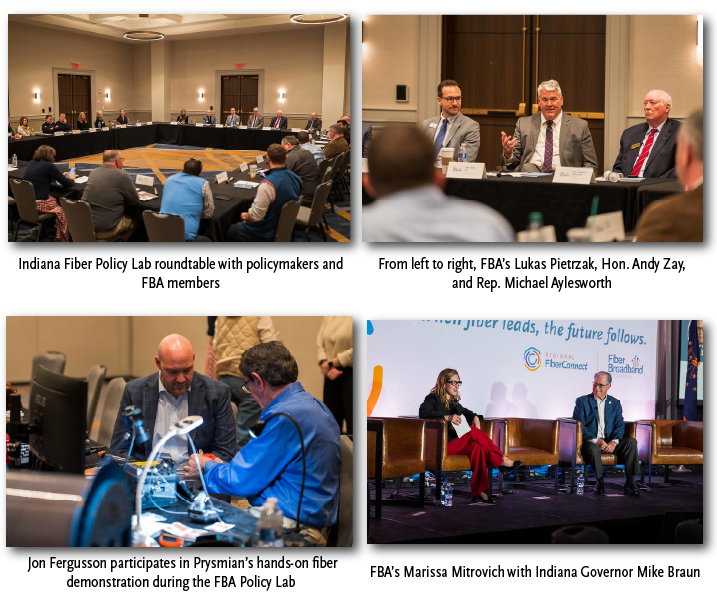 FBA also thanks Prysmian for hosting a live fiber broadband demonstration, offering policymakers and participants a firsthand look – and hands-on experience – with the infrastructure behind next-generation connectivity.
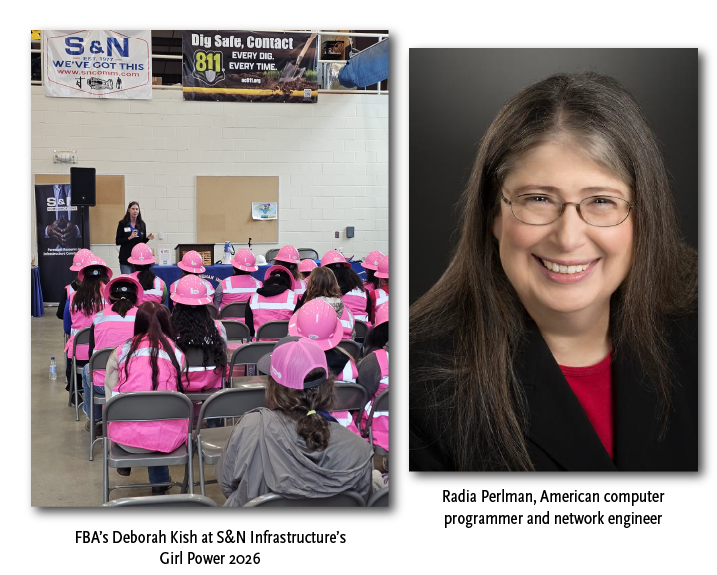
 As Carsi Mitzner transitions to a new chapter, FBA extends our sincere gratitude for her exceptional leadership and dedication as a Public Policy Committee Co-Chair. Through her deep engagement — including her leadership within the State Policy Working Group — Carsi helped strengthen FBA’s policy voice and advance meaningful conversations shaping fiber broadband policy across the country.