Enabling Older Americans to Cross the Digital Divide


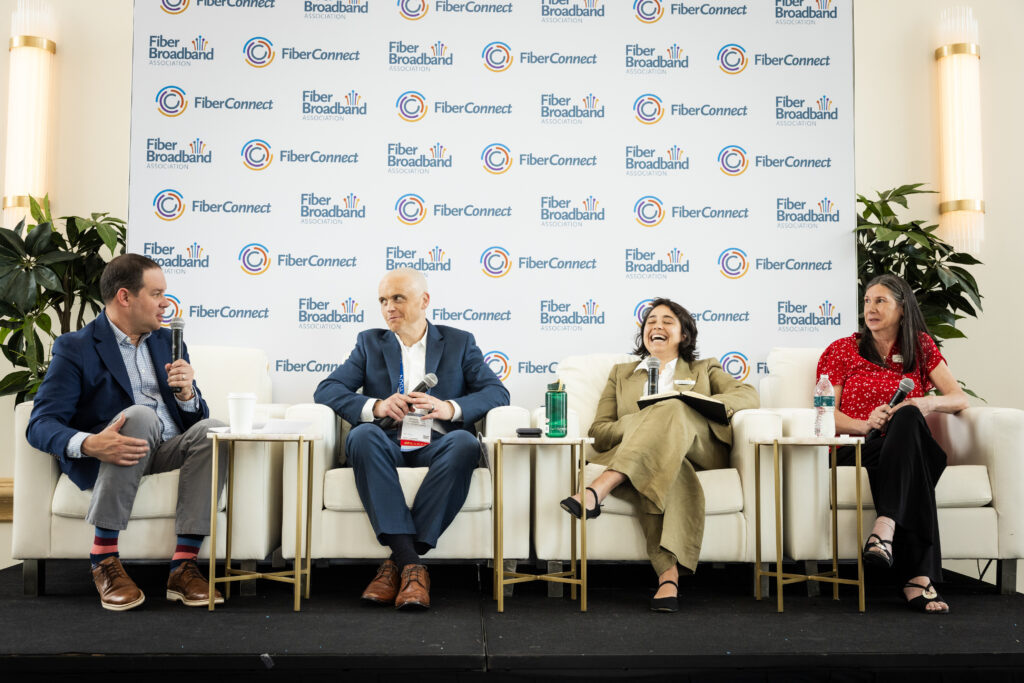
FBA announced its joint initiative with AARP OATS at Fiber Connect 2026, and this panel discussed the issue of connecting older Americans at anchor institutions. Speakers were SHLB’s Joseph Wender, OATS’ Alex Glazebrook, GFiber’s Ariane Schaffer, FBA’s Deborah Kish.
Being a part of today’s society requires more than a checkbook and access to a (U.S. Postal Service) mailbox. High-speed fiber connectivity and digital skills go hand in hand to pay the bills, buy goods and services, set up medical appointments and meet with doctors, and stay in touch with friends and family. But older Americans across the country often find themselves stranded on the wrong side of the digital divide without a way to get across. This gap can leave them socially isolated and unable to access essential services.
At Fiber Connect 2026 in Orlando, the Fiber Broadband Association (FBA) announced a strategic initiative with Older Adults Technology Services (OATS) from AARP, which powers their flagship Senior Planet program, to expand high-speed fiber connectivity and digital skills training to older Americans across the country. By combining infrastructure investment with education and engagement, the initiative helps address both access and adoption, two critical components of digital equity.
“Our work with FBA is about more than connectivity; it’s about opportunity, independence, and dignity for older adults,” said Alex Glazebrook, VP of Business Operations at OATS from AARP. “By working with FBA’s network of providers, we can reach more communities nationwide and ensure older Americans have both the access and skills needed to thrive in today’s digital society.”
The collaboration brings together FBA’s nationwide network of fiber providers and OATS’ proven Senior Planet program to help close the digital divide for aging populations. FBA member operators will connect senior centers, community centers, and libraries to fiber broadband, often at low or no cost, while enabling access to Senior Planet’s technology education programs designed to help older adults thrive safely and confidently in the digital world.
The first FBA/OATS project is taking place in the City of Chandler, Arizona, with GFiber, the first participating provider in the initiative, providing connectivity for senior centers in the area, according to the May 18, 2026, press release formally announcing the initiative. The City of Chandler is a natural fit for the first FBA/OATS effort because of its population of seniors and retirees, plus GFiber has great and long-standing relationships with local officials there.
“We’re excited to develop a partnership with OATS, setting the stage to bring proven, high-quality digital literacy resources directly to the older adults we serve,” said John Sefton, Community Services Director for the City of Chandler, Arizona. “Technology should be a bridge, not a barrier, and this collaboration helps ensure that every member of our community has the tools and confidence to thrive. We’re excited to expand opportunities that support independence, connection, and lifelong learning.”
Through a tiered participation model, providers can scale their involvement based on their size and community footprint, supporting one or more locations with programming that includes digital literacy training, telehealth access education, online safety resources, and opportunities for social connection.
“Broadband is only as powerful as the lives it improves,” said Deborah Kish, Vice President of Research and Workforce Development of the Fiber Broadband Association. “The collaboration with OATS and the Senior Planet program gives FBA members a meaningful way to invest in their aging communities by strengthening local anchor institutions and senior centers, improving health and well-being, and building lasting relationships that go far beyond the network.”
All stakeholders will receive meaningful benefits in participating, with older adults receiving improved access to telehealth, social connection, and digital services, along with trusted training to build confidence and safety online in the AI age while communities get stronger, more connected local institutions that support aging populations and reduce isolation.
FBA members get opportunities to demonstrate community leadership, strengthen customer relationships, and build long-term loyalty. Many want to be active members of the local communities they serve, rather than simply turning up service and sending out a monthly bill.
“At GFiber, we believe access to fast, reliable internet means access to new opportunities,” said Ariane Schaffer, Head of Federal & State Policy at GFiber. “Efforts like this push policy conversations beyond access alone, allowing us to ensure public investment translates into education and support for older Americans.”
By working with FBA members, OATS will get expanded national reach into underserved communities through local broadband providers, while senior centers will be able to get access to free or reduced cost service under a broader initiative than current government policy.
“Unfortunately, regretfully, this [administration’s] NTIA made the decision to limit the universe of anchor nets to the anchors that are eligible for BEAD funding,” said Joseph Wender, Executive Director, Schools, Health & Libraries Broadband Coalition (SHLB), during a Fiber Connect 2026 session discussing the partnership. “They specifically say you’re only eligible [for grant funding] if it’s a government-owned facility. That excludes a number of senior centers, youth centers, job training facilities, that can exclude homes of worship.”

Providing longer and better quality of life for seniors through technology is a major initiative for AARP through its AgeTech Collaborative, shown here at CES 2026. Effectively utilizing such advances will require fiber broadband and digital literacy skills for those who don’t have them. Source: Doug Mohney
Glazebrook detailed the many issues elderly face when they aren’t online, including not having access to critical benefits provided by government agencies, telehealth, and deliveries of goods and services. “We know from the research that we’ve done that about one in three older adults are not connected to high-speed broadband at home,” he said. “It’s actually higher when you look at rural and underserved communities, a lot of whom do not have reliable, high-quality mobile phones to access the internet reliably. When you don’t have a wireline connection that you can access either in your home or at a community-based setting, it’s problematic.”
GFiber’s Schaffer noted that the internet service provider has invested a significant amount of time and money to make sure that it is both physically connecting groups and institutions, as well as supplying resources and devices to ensure access for those who have challenges. “We’re trying to make it seamless,” she said. “Specifically with OATS and the FBA, it is going to help folks learn to be online, but also not have to [worry] about being online and just use the internet for fun, exercise, a simple question, you’re just connected and living life.”
Senior centers already serve as an anchor institution for the elderly, noted Glazebrook, that can provide social connections and purpose, as well as distribute meals. And there are plenty of them across the country. “There are 280 senior centers in the five boroughs in New York City, said Glazebrook. “They serve tens of thousands of meals per day. When you start getting out into underserved rural communities, like my mom’s in the Adirondacks in very northern New York, population of about 480 people in her town, the library serves as a senior center.”
While Chandler is the first partnership, Schaffer expects more in the future. “We talked to a number of communities across our markets that are interested,” she said. “My pitch to you is: If you are looking for something else to either expand or offer to one of your partners that’s doing really amazing work, this is a really good opportunity to do so. For folks that are considering costs, there are a number of tiers with a pretty low cost of entry.”
This article and similar stories can be found in the Q3 edition of the Fiber Forward Magazine.

Related Content
As service providers expand their portfolios beyond basic broadband connectivity, a select few are moving beyond software-based applications into…
Starting out as a local phone company in Meadville, Mississippi, CSpire has built a regional footprint across the South to…
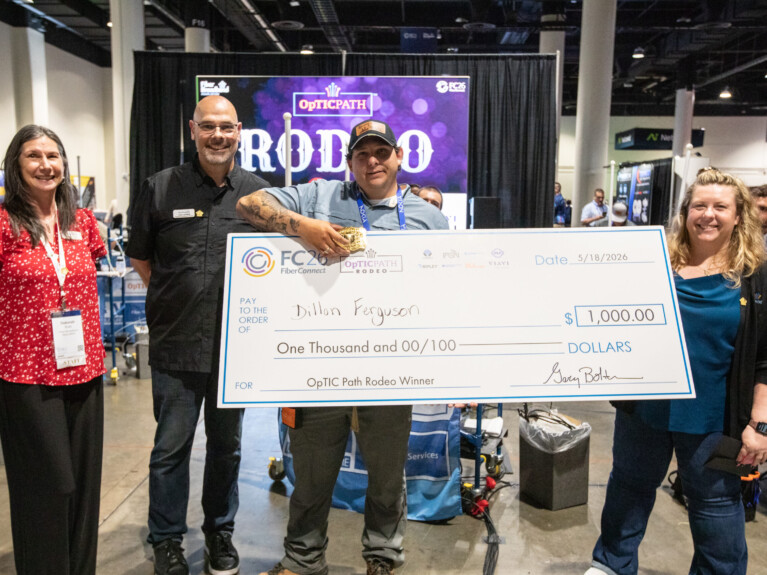
The second annual Fiber Broadband Association OpTIC Path Rodeo crowned a new winner at Fiber Connect 2026 in Orlando. Dillon…