Make the most of FBA membership – or learn how to join.
Contact us at membership@fiberbroadband.org.
Powering the Network (Out & About)
FBA Leads AI Infrastructure Discussion at Mountain Connect
On August 11, Marissa Mitrovich, FBA’s Vice President of Public Policy, moderated a Mountain Connect panel, “The Backbone of AI Infrastructure,” exploring the challenges fiber providers face as they work to meet growing compute and power demands. The discussion covered permitting delays, rights-of-way challenges, environmental reviews, workforce constraints, and inconsistencies across federal, state, and local processes, while also examining how broadband deployment policy intersects with critical infrastructure protection, cybersecurity resilience, and long-term economic competitiveness.
FBA Fiber Policy Lab Spotlights Precision Agriculture in Nebraska
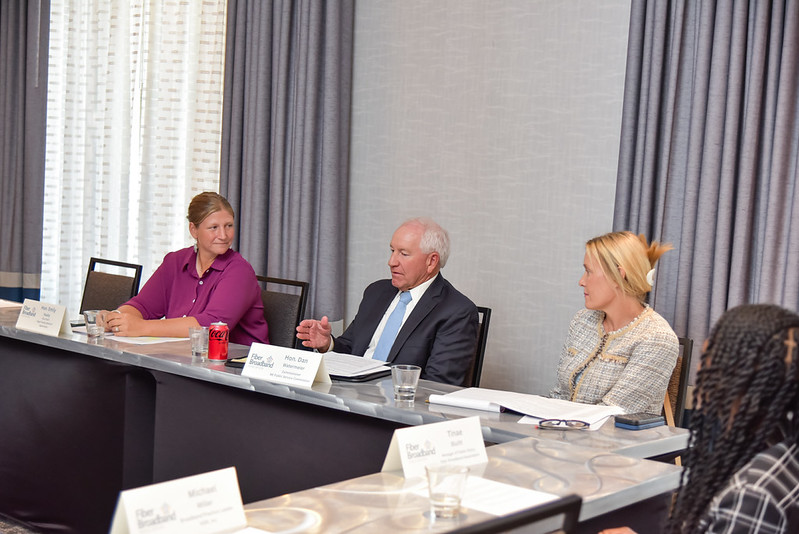
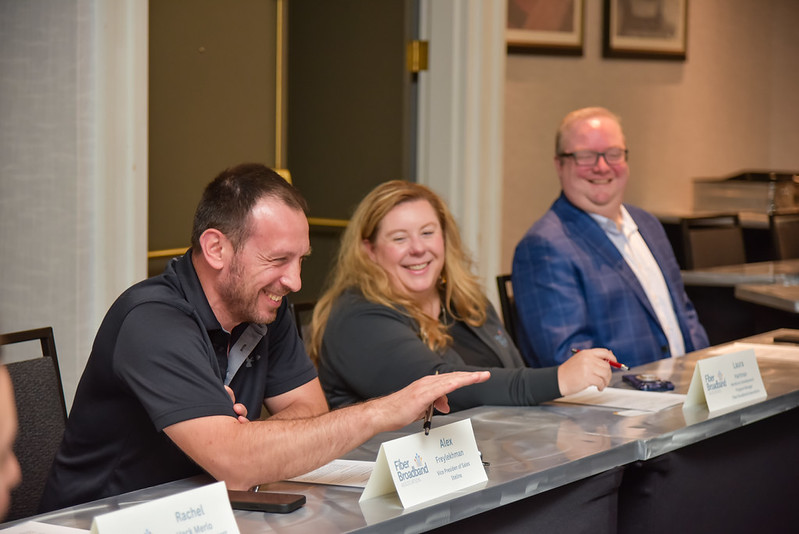
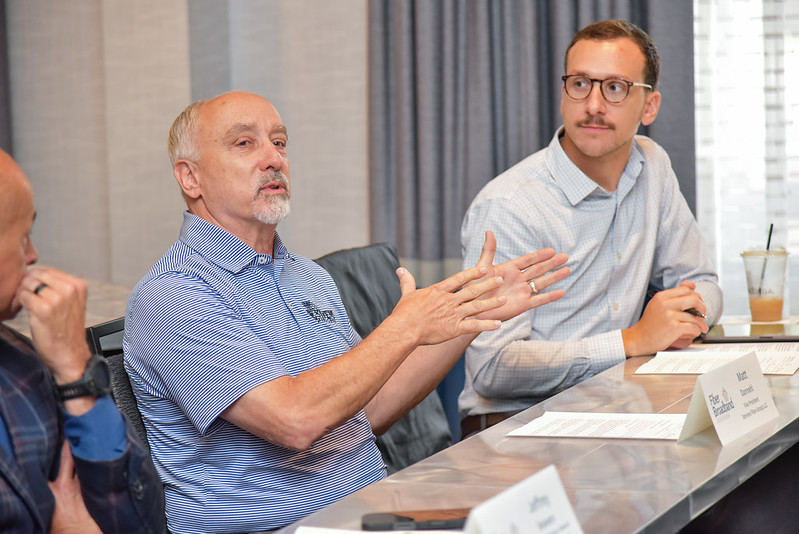
On August 24, FBA held its Fourth Fiber Policy Lab of 2026, convening elected officials, policymakers, and industry stakeholders for a conversation about the importance of fiber broadband for precision agriculture and rural innovation. FBA members and partners were joined by Theresa Thibodeau, District Director for Congressman Don Bacon (NE-02); Commissioner Dan Watermeier of the Nebraska Public Service Commission; and Emily Haxby, Vice Chair of the Gage County, NE Board of Supervisors.

Inside the Build
What to Expect from Congress After Recess
With Election Day less than 10 weeks away, control of Congress is still up for grabs – and lawmakers are returning to Washington with little time to spare. The House returns August 31, followed by the Senate on September 14, giving lawmakers roughly four and three session weeks, respectively, to advance legislation before voters head to the polls on November 3.
Republicans currently hold a 53-47 Senate majority and a 218-212 edge in the House, but competitive races could reshape both chambers. The Cook Political Report currently rates 6 Senate races and 21 House races as toss-ups.
For FBA, the stakes are clear. The election outcome will help shape the direction of permitting reform, USF modernization, and infrastructure investment heading into 2027.
Also moving up the policy agenda: data centers. Supporters point to jobs, economic growth, and U.S. competitiveness in AI, while critics are raising concerns about electricity costs, water use, and environmental impacts. The issue is increasingly bipartisan on the campaign trail: according to Punchbowl News, candidates aired 43 broadcast TV ads mentioning data centers during the 2026 primaries – 22 from Republicans and 21 from Democrats across 21 races in 18 states.
With Congress returning for a short pre-election sprint, and infrastructure debates increasingly playing out at both the federal and state levels, the next several weeks will offer an important preview of the policy landscape the fiber industry will face in 2027.
Republicans currently hold a 53-47 Senate majority and a 218-212 edge in the House, but competitive races could reshape both chambers. The Cook Political Report currently rates 6 Senate races and 21 House races as toss-ups.
For FBA, the stakes are clear. The election outcome will help shape the direction of permitting reform, USF modernization, and infrastructure investment heading into 2027.
Also moving up the policy agenda: data centers. Supporters point to jobs, economic growth, and U.S. competitiveness in AI, while critics are raising concerns about electricity costs, water use, and environmental impacts. The issue is increasingly bipartisan on the campaign trail: according to Punchbowl News, candidates aired 43 broadcast TV ads mentioning data centers during the 2026 primaries – 22 from Republicans and 21 from Democrats across 21 races in 18 states.
With Congress returning for a short pre-election sprint, and infrastructure debates increasingly playing out at both the federal and state levels, the next several weeks will offer an important preview of the policy landscape the fiber industry will face in 2027.
Policy in the Conduit (Policy & Regulatory Updates)
FEDERAL POLICY
NTIA Approves Illinois BEAD Final Proposal
On August 25, NTIA Administrator Arielle Roth announced that NTIA had approved Illinois’ BEAD Final Proposal. With this approval, all 56 states and territories have now received approval and are authorized to move forward in the process of finalizing paperwork and signing agreements with potential awardees.
Federal Broadband Funding Expands Coverage and Competition
A new CostQuest analysis found that federal broadband funding is helping expand both access and competition. Between June and December 2025, the number of locations lacking full broadband access fell by roughly 1 million. As of June 2026, nearly 3.5 million additional homes and businesses had also been tentatively awarded funding for service through NTIA’s BEAD program.
Digital Equity Funding Moves Toward a December Restart
The $2.5 billion Digital Equity Act Competitive Grant Program is moving toward reinstatement as NTIA prepares a new funding notice, with an anticipated December release of a new Notice of Funding Opportunity. The legal challenge over the program’s cancellation has been paused while that process moves forward, with NTIA committing to reinstate the program without the statutory provision covering racial or ethnic minority groups and otherwise follow the law’s requirements.
In an August 17 joint status report filed by the National Digital Inclusion Alliance (NDIA) and the U.S. government, the parties said the forthcoming notice will be a “superseding NOFO (Notice of Funding Opportunity).” The case will remain stayed until two weeks after the NOFO is issued or January 15, 2027, whichever comes first. NDIA is also urging NTIA to allow the 65 organizations previously recommended for awards to revise and resubmit their applications, while the government maintains that decisions about timelines, scoring, and other program mechanics remain within the agency’s discretion. Key questions – including the amount of funding available, treatment of prior applicants, and the final NOFO timeline – remain unresolved.
Permitting Risks Loom as BEAD Moves Toward Construction
As BEAD projects move closer to construction, permitting and pole attachment disputes could become major sources of delay. A New York Law School analysis of 6,933 terrestrial BEAD project areas identified 86,402 permitting triggers across federal, state, local, and third-party authorities. More than half of projects could require over 10 permits, while one in seven could require more than 20.
Experts speaking at Mountain Connect similarly pointed to environmental and historic-preservation reviews, including Section 106, as well as pole attachment disputes, as potential bottlenecks. Engineer Nick Pexton said environmental review has historically been among the lengthiest parts of federally funded broadband projects. With BEAD builds potentially navigating county permits, federal reviews, state rights-of-way, municipal approvals, and agreements with utilities and railroads, coordination across permitting authorities will be critical to keeping deployment timelines on track.
5th Circuit Takes Another Look at USF
The 5th U.S. Circuit Court of Appeals is again weighing a challenge to the Universal Service Fund, with Consumers’ Research asking the court to find that the USF contribution factor is a tax not permitted under the Telecom Act. The group also argues that the FCC has failed to ensure that USF support is limited to programs and technologies that satisfy Section 254.
The judges zeroed in on what USF should fund, whether the contribution factor is too high, and how much authority USAC exercises. The FCC defended the current framework, arguing that USAC performs administrative functions while the Commission retains decision-making authority. The panel gave few signals about how it may rule, keeping USF’s funding scope, contribution structure, and oversight under scrutiny.
USF Task Force Calls for Durable Reform
A new report from the Future of the Universal Service Fund Task Force calls on Congress to strengthen the legal, financial, and structural foundations of the $8+ billion USF as communications technology and connectivity needs continue to evolve. Released by Keep Our Communities Connected and the Schools, Health & Libraries Broadband Coalition, the paper argues that USF should continue to modernize while preserving its core mission of ensuring affordable, reliable communications access.
FBA joined a broad group of communications industry leaders, education, labor, and civil rights in supporting the recommendations, including stronger legal and financial durability, predictable and sustainable funding, modernized affordability programs, improved administration and accountability, and networks prepared for evolving connectivity needs. FBA also emphasized USF’s continued role in supporting long-term network operations, maintenance, cybersecurity, resilience, and affordability.
CONGRESS
Senate Hearing Underscores Fiber’s Role in the AI Economy
The Senate Commerce Subcommittee on Telecommunications and Media examined the infrastructure needed to power artificial intelligence during its July 30 hearing on “Intelligent Networks: Powering Artificial Intelligence and Transforming Communications.” Ahead of the hearing, FBA submitted a letter for the record outlining the fiber industry’s priorities and the importance of fiber infrastructure to the AI economy.
The hearing reinforced that fiber is the backbone of the AI economy, providing the capacity, low latency, scalability, and symmetrical connectivity needed for AI applications, data centers, wireless networks, and emerging technologies. Witnesses also emphasized that AI is driving significant growth in network traffic and capacity needs, making continued investment in communications infrastructure increasingly important.
Permitting reform emerged as the dominant policy theme. Witnesses described federal, state, and local permitting delays as a leading obstacle to both new fiber builds and network upgrades. The discussion also highlighted the importance of universal connectivity and a sustainable USF to ensure rural and underserved communities can participate in the AI economy.
Farm Bill Stalls, Putting ReConnect Reauthorization on Hold
The Senate Agriculture Committee failed to advance the 2026 Agricultural Act in a 10-11 vote, pushing further action on the farm bill until after the August recess. The delay leaves several rural broadband provisions unresolved, including legislation that would codify the USDA’s ReConnect program and merge it with other department broadband initiatives.
The Senate bill would provide $100 million annually for the consolidated ReConnect program through FY 2031 and set a 100/20 Mbps minimum speed requirement for funded projects. It would also create a new “Last Mile” program focused on broadband deployment to farms and ranches to support precision agriculture. The House passed its own farm bill in April, which also proposes codifying ReConnect but sets a different speed threshold.
Senate Weighs User Fees in USF Overhaul
As lawmakers work toward an overhaul of the $8 billion-a-year Universal Service Fund, Senate Commerce telecom subcommittee Chair Deb Fischer (R-NE) is backing a broader user-fee model to sustain the program. Fischer said she believes “user fees are the way to go,” an approach that could ultimately extend USF-related charges beyond traditional phone bills to broadband or other internet services.
The funding debate is far from settled. Senate Commerce Chair Ted Cruz (R-TX) has previously opposed expanded user fees and favored annual congressional appropriations, while Fischer and Ranking Member Ben Ray Luján (D-NM) are gathering stakeholder feedback to produce a Senate draft. House telecom subcommittee Chair Richard Hudson (R-NC) is also developing legislation, underscoring that how USF is funded – and how to balance sustainability, transparency, and affordability – will be central to the reform debate.
FCC
High-Cost USF Debate Turns on the Role of Satellite
The FCC’s review of the High-Cost Universal Service Fund is sharpening a broader debate over how rural broadband should be supported. SpaceX urged the Commission to eliminate high-cost subsidies where unsubsidized competitors can provide comparable service, arguing that continued support distorts markets and wastes limited USF resources. Most other commenters took the opposite view, calling for the program to be modernized rather than dismantled and stressing the continued need for support in rural and high-cost areas.
FBA argued that modernization should begin with updating the program’s outdated speed thresholds so supported networks can meet consumers’ long-term connectivity needs. State and industry commenters likewise emphasized the importance of fiber and other terrestrial infrastructure, warning against treating satellite availability as a full substitute for those networks. That concern was echoed by FCC Commissioner Anna Gomez, who cautioned that the growth of low-Earth-orbit satellite service should not be taken as a reason to scale back universal service.
Senate Eyes September Hearing for FCC Nominee Danielle Thumann
President Trump has nominated Danielle Thumann, senior counsel to FCC Chairman Brendan Carr, to fill the Republican FCC seat previously held by Nathan Simington. Senate Commerce is expected to consider her nomination soon after lawmakers return from the August recess, with a confirmation hearing possible in September and committee action potentially following before the pre-election break.
If confirmed, Thumann’s term would run through June 30, 2029. Her nomination could also revive broader questions over the FCC’s composition, as Democrats weigh whether to support her without a Democratic nominee for the Commission’s other vacant seat. Industry groups, including FBA, have expressed support for her nomination, while final Senate confirmation may not come until the post-election lame-duck session.
FCC Permitting Agenda Moves on Wireless and Wireline Fronts
The FCC is advancing parallel efforts to streamline infrastructure permitting, with action underway on both wireless and wireline deployment. The agency’s 2026 regulatory agenda targets November 2 for new rules intended to streamline local review of certain wireless infrastructure modifications.
On the wireline side, the FCC has set September 21 for initial comments and November 5 for replies on its June permitting reform proposal, approved 3-0. Together, the proceedings put permitting reform and the scope of FCC authority over local review on the Commission’s fall agenda.
FCC Finds Broadband Deployment Reasonable and Timely
The FCC’s latest Section 706 Report concludes that advanced telecommunications capability is being deployed to all Americans in a “reasonable and timely fashion,” reversing the Commission’s 2024 finding. As of June 2025, 96.9% of Americans had access to fixed terrestrial broadband at 100/20 Mbps. From June 2024 to June 2025, the number of Americans without access to that service fell by about 23%, and over two years the share of rural Americans without access fell by more than 44%.
The report also found that 77% of Americans had access to three or more fixed services at 100/20 Mbps, while 43.4% had access to three or more fixed terrestrial services at those speeds. The FCC limited its Section 706 analysis to availability and deployment, declining to include affordability, adoption, or equitable access. Commissioner Anna Gomez concurred but objected to that narrower approach, arguing that affordability and usability are also important to ensuring people are connected.
STATES
Texas Pauses BEAD Payments Amid Starlink Favoritism Probe
The Texas Broadband Development Office has temporarily suspended BEAD disbursements as state lawmakers investigate allegations that Starlink received favorable treatment. Starlink was awarded more than $108 million of Texas’ $1.2 billion in BEAD deployment funds.
Lawmakers have questioned a change to the state’s payment rules made just before funding was set to go out. While most subgrantees were slated to receive 10% upfront, Texas revised the policy to provide more upfront funding to satellite providers. After Amazon Leo withdrew from its agreement, Starlink became the state’s only low-Earth-orbit BEAD subgrantee.
New York Broadband Programs Face Higher Costs, Fewer Locations Served
A new report from the New York Law School’s Advanced Communications Law and Policy Institute found that projects under New York’s Municipal Infrastructure Program and Affordable Housing Connectivity Program are serving fewer locations while costs have increased. Of 34 projects reviewed, 10 received grant increases and seven had funding reduced, resulting in $38 million in net increased expenditures.
At the same time, 15 projects reduced the number of locations they planned to serve, totaling 34,000 fewer locations. The report did not identify a definitive cause, but pointed to several possible factors, including pressure to meet a year-end construction deadline, increased broadband investment by ISPs, and higher material and workforce costs.
Colorado Develops Statewide Middle-Mile Roadmap
On August 11, FBA submitted comments on August 7 to the Colorado Broadband Office (CBO) in response to their “Draft Middle Mile Due Diligence and Strategic Roadmap Report.” FBA applauded CBO’s commitment to addressing and closing gaps in the state’s middle mile infrastructure and encouraged CBO to pursue permanent state funding for the initiative and include telecommunications stakeholders in working groups and planning discussions.
Mark Your Calendar
FBA Fiber Policy Lab Heads to Boston
On September 23, FBA will host its Fifth Fiber Policy Lab of 2026 in Boston, MA. The event will focus on the innovations powered by fiber and how industry stakeholders and public officials can work together to expand connectivity across Massachusetts and the New England region.
If you are interested in attending, please RSVP to Lukas Pietrzak at LPietrzak@fiberbroadband.org
We welcome your input.
Meet Your Public Policy Team

Marissa Mitrovich
Vice President, Public Policy
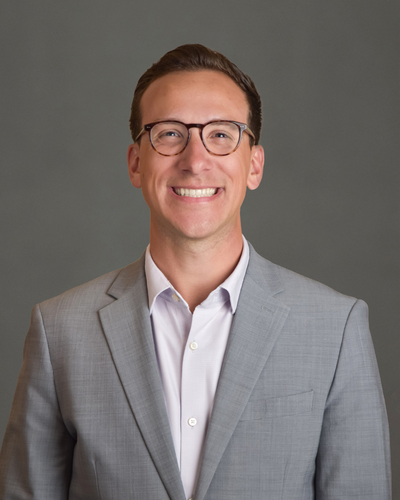
Lukas Pietrzak
Director of Public Policy

Tinae Bluitt
Public Policy Manager
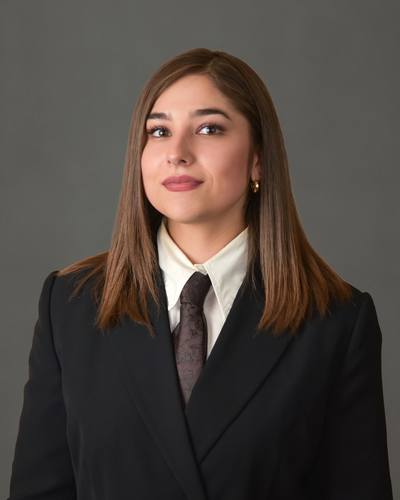
Jeanne Le Delaizir
GFiber Public Policy Fellow