Martha Galley

Chief Sustainability Officer - Calix


Nominee Questionnaire


Please provide a short bio for voters to get to know you.  

I’m Martha Galley, and I’ve spent over 40 years leading strategic and operational initiatives in the software and cloud industries across global markets. Today, I serve as the Chief Sustainability Officer at Calix, where we provide platform, cloud, and managed services solutions to the broadband industry. 

Throughout my career, I’ve focused on customer experience & success, go-to-market strategy, and sales. I’ve held executive roles at Microsoft, Salesforce, and Calix, where I’ve built new businesses from the ground up, essentially acting as an intrapreneur within each organization. I’ve led efforts to open new markets, expand into international regions, and reimagine global engagement and success services. I’ve also leveraged AI and analytics to help customers gain deeper business insights. 

Operationally, I’ve grown businesses by more than 100% year-over-year, led teams of over 300 people, built global organizations across 20 countries, and consistently delivered revenue growth and margin expansion. I’ve managed P&Ls ranging from $350M to $800M, overseen both direct and channel sales, integrated acquired companies, and turned around struggling business units. 

What drives me is building high-performance teams and forging strong strategic partnerships. I’m deeply committed to delivering exceptional customer experiences, driving operational excellence, and supporting employee development. I also prioritize creating a positive, inclusive, and diverse workplace culture. 

At Calix, I’m proud to serve as the executive sponsor for our Employee Resource Groups. I also co-chair the Women in Fiber committee at the Fiber Broadband Association, sit on the Industry Advisory Council for the President of Smith College, and am a member of Reno Women for Good. In the past, I’ve mentored through the U.S. Department of State’s TechWomen program and served as an advisor with Astia. 

I earned my BA in Biology from Smith College and have published scientific research. My executive education includes programs with McKinsey, Harvard Business School, and Stanford Graduate School of Business. 


Please summarize why you consider yourself an excellent candidate for the FBA Board of Directors?  

I’m deeply passionate about the mission of the Fiber Broadband Association, especially its commitment to digital equity. I believe that a person’s opportunity and potential should never be limited by the zip code they live in. Expanding fiber access is a once-in-a-generation opportunity, much like rural electrification or the development of the interstate highway system. It’s not just about deploying technology, it’s about transforming lives and communities. 

While having compelling technology like fiber is essential, it’s not enough on its own to drive the societal change we’re aiming for. We also need to communicate the value of this transformation in ways that inspire action and build momentum. That’s where I believe I can bring unique value to the FBA Board. I’ve spent my career leading strategic initiatives, building high-performing teams, and driving customer engagement at companies like Microsoft, Salesforce, and Calix. I understand how to translate complex innovation into meaningful impact. 

I also know how to build and grow communities. I founded the customer communities at both Salesforce and Calix, and I’ve seen firsthand how engagement and advocacy can fuel organizational success. I would bring that same energy and experience to help FBA expand its membership, deepen engagement, and amplify its voice across the industry. 

Serving on the FBA Board would be an opportunity to contribute my strategic perspective, operational experience, and deep commitment to equity and inclusion. I’m ready to help accelerate fiber deployment, support member success, and ensure that the benefits of broadband reach every corner of our society. 


Describe your current position and functional responsibilities to your company. 

I currently serve as the Chief Sustainability Officer at Calix, a role I’ve held since June 2023. In this position, I lead our sustainability strategy across products, people, supply chain, and enterprise infrastructure. My responsibilities include aligning the organization around our sustainability goals, communicating our progress to stakeholders, and ensuring regulatory compliance and disclosure. I report quarterly to the Calix Board of Directors, regularly engage with investors and media, and serve as an executive sponsor for key customers. My role is deeply cross-functional and externally facing, allowing me to influence both internal operations and industry-wide conversations around sustainability and innovation. 


What was your previous position, and how long did you hold that position before transitioning to your current one?  

Before stepping into my current role, I served as Chief Customer Officer at Calix from July 2018 to June 2023. During that time, I was responsible for our entire services portfolio and its associated P&L. As Calix transformed into a platform, cloud, and managed services company, my team played a critical role in helping customers adopt new technologies and realize the full value of their investments. We focused on driving customer success, accelerating time-to-value, and building long-term relationships that supported both our customers’ growth and our own. 


Do you have any experience as a member of a Board of Directors? If so please provide name of the entity and number of years of which you served.  

While I haven’t yet served on a board with fiduciary responsibility, I’ve been actively involved in several executive advisory roles. I’m an Astia Advisor, supporting technology entrepreneurs in scaling their businesses, and I serve on the Presidential Industry Leadership Council for Smith College, where I help shape career development and entrepreneurship programs. I’m also preparing for future board service: I’ve completed the Harvard Business School’s board preparation program and included in the New York Stock Exchange’s board candidate database. I’m committed to bringing my experience, strategic insight, and passion for equity and innovation to a public company board in the near future. 


How many years has your company been a Fiber Broadband Association Member?

Calix has been an FBA member since 2009, 16 years. 


How many years have you participated in Fiber Broadband Association activities?  

I’ve been actively involved with the Fiber Broadband Association for approximately four years. During that time, I’ve grown increasingly engaged in its mission, committees, and initiatives that support the expansion of fiber and digital equity across North America. 


Please indicate any Fiber Broadband Association Committees or working groups you have participated on including position and years served. 

Over the past four years, I’ve participated in several FBA committees and working groups. I began by engaging with the Women in Fiber committee and, this year, I stepped into a leadership role as Co-Chair of that committee. I also serve on the Sustainability Committee, where I contribute to current work comparing the environmental impact of fixed wireless and fiber, and upcoming efforts focused on LEO satellite vs. fiber sustainability. 

Additionally, I’ve championed FBA-sponsored research, including the CORI study “Beyond Connectivity: The Role of Broadband in Rural Economic Growth and Resilience.” I helped amplify its findings by hosting one of the study’s authors on my quarterly LinkedIn Live broadcast, bringing broader visibility to the importance of fiber in rural development. 


Please list any Fiber Broadband Association Contributions (activities supported, assets developed, documents drafted, webinars presented, etc.) I have attended numerous Fiber Connect events. Volunteered for Policy committee.

I’ve supported FBA events as part of the Calix team, contributing both in-person and through content development. As Co-Chair of the Women in Fiber Committee (alongside Candy Reim of MEC), I’ve helped lead the committee’s strategic direction and outreach. 

Previously, I co-chaired the Professional Development working group within the Women in Fiber committee, where I collaborated with Tanna Hanna of ALLO to plan and host monthly webinars focused on leadership, career growth, and industry insights. 

In the Sustainability Committee, I’ve contributed to ongoing work around fiber’s environmental advantages and helped shape future comparative studies. I’ve also supported the CORI research by referring customers for assessment and promoting the findings through my LinkedIn Live broadcast, helping extend its reach to industry leaders and decision-makers. 


Please provide a short overview of your experience with telecommunications, fiber optics, and FTTH technologies.  

Over the past 14+ years, I’ve worked extensively in the telecommunications industry, always with a strong business focus. At Microsoft, I led half of the U.S. Telecommunications, Media, and Entertainment business, a $350M full P&L portfolio that included systems, software, mobile devices, application hosting, and IPTV. My primary customers were Tier 1 and Tier 2 providers, and I managed both sell-to and sell-through go-to-market strategies. 

Later, I led Microsoft’s go-to-market efforts across South America, partnering with major carriers like América Móvil, Claro, Telefónica, and Entel to bundle Office365 into their business services offerings. For the past seven years at Calix, I’ve been deeply involved in product planning across access, premises, cloud, and managed services. This requires a strong understanding of both the technical and business challenges our customers face in deploying and monetizing fiber and FTTH technologies. 


Please describe the goals you would like to accomplish during your term as Fiber Broadband Association Board Member.  

If elected to the FBA Board, I would focus on four key goals: 

  • Reach: Expanding membership is essential to FBA’s long-term impact. I’ve proposed a Regional Ambassador program, currently being piloted within the Women in Fiber committee, to help drive local engagement and membership growth. 
  • Engagement: Engaged members are more likely to stay involved and contribute. Drawing on my experience building vibrant customer communities at Salesforce and Calix, I can help FBA deepen member engagement and foster advocacy. 
  • Value: I bring a strong business lens to the table. I want to help FBA build compelling business cases for fiber deployment, not just in terms of infrastructure, but in terms of subscriber connectivity and economic impact. 
  • Enablement: Workforce development is a critical challenge. With my background leading education services and customer success teams, I can support FBA’s efforts to address skills gaps and prepare the workforce for the future of fiber, AI, and cybersecurity. 


Please describe the level of commitment (in terms of time and effort) that you intend to make to the Association during the three-year term. 

I fully understand the time and effort required to serve on the FBA Board and am committed to being an active, engaged, and collaborative board member. I have the full support of the Calix CEO and executive leadership team to dedicate the necessary time and resources to this role. 


Please use this space to include any additional information you feel is important to share with voting members.   

Thank you to all the Premier Members who are taking the time to consider my candidacy. It would be an honor to serve the mission and members of the Fiber Broadband Association. From my very first engagement with FBA, I’ve felt heard, valued, and welcomed—and I deeply appreciate that. I’m excited about the opportunity to give back and help drive the next chapter of growth, innovation, and inclusion in our industry. 


Jamie Pickup-Grogg

Regional Vice President, Communications - Hubbell Utility Solutions


Nominee Questionnaire


Please provide a short bio for voters to get to know you.  

Jamie Pickup is an executive with deep experience in broadband and utility infrastructure.  With over 20 years of experience in broadband she currently serves as Regional Vice President-Communications at Hubbell Utility Solutions. There she leads initiatives supporting outside plant materials and fiber deployments across the US.  Jamie works with broadband providers, cooperatives, and tribal nations to deliver solutions that meet today’s challenges while preparing to meet the demands of both the grid and fiber for tomorrow. 

Living in Rural America all of her life, Jamie is a passionate advocate for broadband and has seen firsthand how it can impact communities and families.   

Today, Jamie and her family live in rural Oklahoma where she is active with her family (8 children and 9 grandchildren), community, and two spoiled French Bulldogs (Buddy Howlly and Ozzy Pawsbourne).   

Like her name suggests, Pickup is hard working, reliable, and ready to explore the new terrain ahead in the broadband industry.   


Please summarize why you consider yourself an excellent candidate for the FBA Board of Directors?

I am deeply committed to advancing broadband access in rural America, where I have lived and worked my entire life. My firsthand experience with the challenges and opportunities of fiber deployment drives my advocacy for equitable connectivity. Through leadership roles in the FBA’s Women in Fiber Leadership Team, Middle Mile Working Group, and AI Machine Learning Working Group, I have demonstrated a strong dedication to collaboration and ensuring no community is left behind as technology evolves.  

Professionally, I bring a unique perspective from across the broadband industry—having worked as a contractor, distributor, and now as Regional Vice President for Communications at Hubbell Utility Solutions. My expertise spans fiber splicing, supply chain management, and manufacturing. I’ve navigated complex challenges such as BABA requirements, deployments, and supply chain challenges.  My work at Hubbell Utility Solutions uniquely positions me to manage our next industry challenge, the surge of AI data centers and the massive demands they place on not only fiber, but our electrical grid.  Hubbell sits at the intersection of Broadband and Power. I am committed to strengthening partnerships between FBA, utilities, and their various associations. My vision centers on expanding collaboration, developing the workforce of tomorrow, and driving fiber deployment further. My reliability, hard work, and readiness to tackle future demands make me an ideal candidate to help lead FBA’s advocacy and innovation efforts. 


Describe your current position and functional responsibilities to your company.

I currently serve as Regional Vice President of Communications for Hubbell Utility Solutions.  In this role I lead sales strategy, market development, and customer engagement across key product lines with a particular focus on enabling fiber broadband deployment through innovative and scalable OSP solutions.  My functional responsibilities include: 

  • Market Strategy & Growth with emphasis on our Utility Broadband Market
  • Sales Leadership & Customer Engagement 
  • Executive Communication & Reporting
  • Product & Program Alignment 
  • Industry & Community Partnerships 


What was your previous position, and how long did you hold that position before transitioning to your current one?

My Previous Position with Hubbell was as a Territory Manager where I served for 2 years before advancing to my current role as RVP Communications.   


Do you have any experience as a member of a Board of Directors? If so please provide name of the entity and number of years of which you served.

No


How many years has your company been a Fiber Broadband Association Member?

9 Years of Membership with 3 years as Premier Members 


How many years have you participated in Fiber Broadband Association activities?

With Hubbell for 6 years and in previous roles for 12 years 


Please indicate any Fiber Broadband Association Committees or working groups you have participated on including position and years served.

  • Women In Fiber – 3 years 
    • Spotlight Committee Co Lead 
  • Middle Mile Working Group – 1 year 
  • AI & Machine Learning Working Group – 6 months 


Please list any Fiber Broadband Association Contributions (activities supported, assets developed, documents drafted, webinars presented, etc.) I have attended numerous Fiber Connect events. Volunteered for Policy committee.

  • Collaborated on the Middle Mile White Paper Published in June 2025 
  • Women in Fiber Mentorship 
  • Women in Fiber Mentorship Webinar 


Please provide a short overview of your experience with telecommunications, fiber optics, and FTTH technologies.

I have extensive experience in the telecommunications sector, with a particular focus on fiber optics and FTTH technologies. My career began in the field as a contractor, where I gained hands-on expertise in fiber splicing and deployment. I then transitioned into sales and distribution, deepening my understanding of the supply chain and customer needs. Currently, I work in manufacturing at Hubbell Utility Solutions, where I specialize in Utility Broadband efforts and Tribal Broadband initiatives. This diverse background has given me a comprehensive perspective on the industry, from technical implementation to strategic collaboration, and enables me to address the unique challenges of expanding fiber networks to underserved communities. 


Please describe the goals you would like to accomplish during your term as Fiber Broadband Association Board Member.

During my term as a Fiber Broadband Association Board Member, my primary goals are to keep FBA’s advocacy in top gear by expanding collaboration and growing membership across the broadband ecosystem. I am especially focused on ensuring that rural America is fully equipped for the digital future. I am committed to developing tomorrow’s workforce by supporting the FBA’s OpTIC Path Program. Additionally, I will focus on strengthening partnerships between the FBA, utilities, and their organizations to drive innovation and address the demands and opportunities presented by emerging technologies—such as AI data centers, their impact on the grid, and the role of fiber in enabling innovative solutions for grid efficiency.  

My vision is for FBA to continue leading the industry in reliability, hard work, and progress—making sure no community is left behind as fiber deployment accelerates. I aim to help the industry lay down more miles of fiber, enhance grid performance through fiber, and foster an environment where collaboration and advocacy deliver real results for all stakeholders. 


Please describe the level of commitment (in terms of time and effort) that you intend to make to the Association during the three-year term.

I am fully committed to dedicating the time and effort necessary to actively serve the Fiber Broadband Association over the entire three-year term. I intend to participate consistently in board meetings, committee work, and advocacy initiatives, and to be available for collaboration with fellow board members, staff, and industry partners. My experience balancing hands-on work, leadership roles, and strategic projects demonstrates my reliability and readiness to tackle demanding responsibilities. I am prepared to contribute not only during scheduled events but also to support ongoing projects, respond to emerging challenges, and help drive FBA’s mission forward whenever needed. My goal is to be a dependable and engaged board member who helps ensure the Association’s continued success and impact. 


Please use this space to include any additional information you feel is important to share with voting members.

As someone whose last name is “Pickup” I like to think I’ve built my career in the same way a good pickup truck works-dependable, built for the long haul, and ready to tackle tough terrainBroadband deployment is not easy work, but its meaningful work, and I bring both determination and creativity to driving fiber furtherServing on the FBA board would be an honor, and I am committed to serving our industry and the challenges ahead.    

Niki Carnahan

Manager of Business Development - Vetro


Nominee Questionnaire


Please provide a short bio for voters to get to know you. 

I am a business development and sales professional with a passion for building strong relationships and driving meaningful results. In just under eight years in the broadband industry, I have fostered meaningful relationships, developed creative partnerships, and delivered effective results with the organizations I’ve worked with. I bring creativity, energy, and a strong work ethic to every role, pairing strategic vision with hands-on execution. I am especially committed to fostering engagement and collaboration, and I strive to bring people together to solve challenges, spark new ideas, and create lasting impact.  


Please summarize why you consider yourself an excellent candidate for the FBA Board of Directors? 

I bring a fresh perspective and energy to the table, with a strong belief that the future of broadband depends on engaging both experienced leaders and the next generation of talent. I want to help show that this industry offers meaningful opportunities for emerging voices and that their contributions are valuable. By introducing new, creative ideas, I aim to help the industry stay dynamic and forward-looking while also attracting the skilled workforce needed to achieve our shared goal of connecting communities through broadband.  
 

Describe your current position and functional responsibilities to your company. 

In my current role at VETRO, I lead business development by using creative approaches to spread the word about our solutions and drive growth. I focus on fostering collaboration and finding innovative ways to achieve organizational objectives. I prioritize building meaningful relationships, making every interaction purposeful rather than transactional, and ensuring that connections I create deliver lasting value.  


What was your previous position, and how long did you hold that position before transitioning to your current one? 

My previous roles combined business development and account executive responsibilities, which I held for approximately six years. In these positions, I was responsible for representing and carrying out the company’s mission and vision in every client interaction, ensuring that each engagement aligned with organizational goals while delivering value to customers.  


Do you have any experience as a member of a Board of Directors? If so please provide name of the entity and number of years of which you served. 

No


How many years has your company been a Fiber Broadband Association Member?

Approximately 9 years  


How many years have you participated in Fiber Broadband Association activities? 

Approximately 7 or 8 years  


Please indicate any Fiber Broadband Association Committees or working groups you have participated on including position and years served. 

I have served as a leader on the Women in Fiber Mentorship Committee, where I have been responsible for connecting mentors and mentees and supporting the program’s development. As one of the original members who helped launch the initiative in 2021, I take pride in having contributed to its foundation and have greatly valued watching both the committee and the program grow and thrive over the years.  


Please list any Fiber Broadband Association Contributions (activities supported, assets developed, documents drafted, webinars presented, etc.) 

  • Women in Fiber Mentorship Committee Mentor/Mentee guideline – Women in Fiber Mentorship Webinar  
  • Participation in numerous Fiber Connects, Regional Connects, and Member Meet Ups.  


Please provide a short overview of your experience with telecommunications, fiber optics, and FTTH technologies. 

Like many, I stumbled into broadband without fully knowing what it entailed—but nearly eight years later, I have loved every minute of it. I have worked closely in the OSP construction and engineering space, providing software solutions to support the operations of fiber operators and EPC vendors. Every day, I feel that I am contributing in a meaningful way, playing a small part in our shared mission to connect communities and expand broadband access.  


Please describe the goals you would like to accomplish during your term as Fiber Broadband Association Board Member. 

I feel fortunate to have gained extensive exposure to this industry and recognize that not everyone has the same opportunities. If elected, I would like to help create a space where young, new, and diverse talent can enter and thrive, fostering new ideas and opportunities that will propel the industry forward. I also attribute my own success to the incredible “fiber family” I have had the privilege of working with—an industry community where collective efforts enable meaningful impact. I would be committed to helping the FBA not only lead in broadband deployment but also set the standard for supporting our people, encouraging collaboration, and strengthening connections across members and industry leaders.  


Please describe the level of commitment (in terms of time and effort) that you intend to make to the Association during the three-year term. 

I am fully committed to dedicating the time and energy necessary to actively contribute throughout the three-year term. I will prioritize attending board meetings, participating in committee work, and engaging in discussions and initiatives that support the Association’s mission. Beyond the scheduled commitments, I intend to be an active ambassador—bringing energy, creativity, and collaboration to help move the industry forward. I see this role as an opportunity to not only contribute my skills and ideas, but also to engage meaningfully with fellow members to achieve our shared goals. 


Please use this space to include any additional information you feel is important to share with voting members.   

I am deeply passionate about the FBA and the role it plays in advancing our industry. I regularly share the value of Fiber Connect and Regional Connects with peers and actively encourage others to attend FBA events because I know how impactful these interactions can be. Over the years, I’ve been consistently impressed by the FBA team—their professionalism, kindness, and ability to execute with energy and integrity—and I would be honored to help highlight their efforts and contribute to the Association’s success.  

As a board member, I want to help foster stronger collaboration among current members while also encouraging new talent to enter the workforce. Just as important, I want to ensure that emerging voices know their perspectives are welcomed and valued. Creating a supportive environment where fresh ideas can thrive will be critical to the continued growth of our industry, and I am committed to helping the FBA lead the way in making that a reality. 

Brightspeed Unveils Business Premium Fiber: Enterprise Power Without Enterprise Complexity

Brightspeed Unveils Business Premium Fiber: Enterprise Power Without Enterprise Complexity
Solution delivers affordable enterprise-grade capabilities with guaranteed performance

CHARLOTTE, N.C. — October 1, 2025 — Today, Brightspeed, the nation’s third-largest fiber broadband builder, announced the launch of Brightspeed Business Premium Fiber; 2 Gig internet connectivity that is service-level agreement (SLA) backed with 99.95% availability, ensuring minimal downtime for critical systems.

In today’s digital-first economy, internet performance is a business-critical enabler. Cloud-native applications, distributed workforces and data-heavy workflows have pushed bandwidth demands to record highs. Over the past five years, usage has more than doubled, with upload traffic up 103% and downloads up 105%. The first quarter of 2025 alone saw an additional 9.5% surge in overall bandwidth utlization.*

“Growing businesses shouldn’t have to choose between underpowered internet and overpriced infrastructure,” said Jeff Lowney, president of Brightspeed Business Group. “Business Premium Fiber was built specifically for companies that need enterprise-grade performance that includes an SLA-backed commitment, which ensures minimal downtime for business-critical systems. These agreements give businesses confidence that service disruptions will be addressed quickly and effectively.”

Tackles today’s business challenges

Brightspeed Business Premium Fiber solves for the real costs businesses face when connectivity can’t keep up, such as:

  • Productivity loss from lagging bandwidth and dropped video calls,
  • Security risks from dynamic IP addresses that complicate VPNs and secure access,
  • Competitive disadvantages when rivals leverage advanced cloud and AI tools,
  • Wasted IT talent troubleshooting networks instead of driving growth, and
  • Over-investment in enterprise solutions that often deliver limited ROI.

Enterprise-grade performance, simplified

Brightspeed Business Premium Fiber is engineered to deliver reliable, scalable performance tailored to modern business operations. Key features include:

  • Symmetrical speeds up to 2 Gbps for seamless uploads and downloads.
  • Static IP for secure remote access and consistent VPN connectivity.
  • Service-level agreement (SLA) with guaranteed performance and response times.

 Currently, Brightspeed Premium Fiber is available across the company’s 20-state footprint.

 *According to 1Q25 OpenVault Broadband Insights report

About Brightspeed 

Headquartered in Charlotte, N.C. and with assets and associated operations in 20 states, Brightspeed provides broadband and telecommunications services through a network platform capable of serving more than 7.3 million homes and businesses. Our nearly 4,000 employees are committed to building a future where more communities benefit from a more connected life, deploying a state-of-the-art fiber network and a customer experience that makes being connected as simple as it should be. For more information, please visit www.brightspeed.com.

FFB Week 40: The Future of Agriculture Grows on Fiber

The Future of Agriculture Grows on Fiber

This week’s Fiber for Breakfast podcast, Dr. William Aderholdt, Executive Director and Cofounder of Grand Farm discussed how fiber is accelerating innovation in agriculture and how Grand Farm supports real-world testing and validation of technologies like autonomous equipment, IoT sensors, and AI-driven tools that rely on strong broadband infrastructure.

In 2019, leaders in Fargo, North Dakota, posed a simple but far-reaching question: If our community had to choose a major, what would it be? The answer was clear—agriculture technology. That decision gave rise to Grand Farm, a collaborative network designed to accelerate innovation in farming by serving as a global testbed.

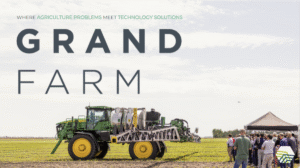
Farming machine equipment in field with people watching demonstration.“Grand Farm started by asking how we could take the problems and opportunities in agriculture and expose them to innovators from around the world,” said Aderholdt. “We wanted to bring people together on a testbed to accelerate innovation. Connectivity—last mile and last acre—was one of the first things we became known for talking about.”
The timing was significant. In 2019, federal investments in broadband were ramping up, and conversations around artificial intelligence and automation in rural communities were intensifying. Agriculture, historically one of the last industries to embrace digital transformation, suddenly had new opportunities—if connectivity could keep pace.

Building a Collaborative Ecosystem

Grand Farm today works with about 2,500 organizations worldwide, including 500 startups and 75 core partners ranging from universities like North Dakota State and the University of Georgia to major technology players like Microsoft. Local providers, such as Dakota Carrier Network, have been instrumental in enabling the connectivity required for innovation.

At the heart of Grand Farm’s model is collaboration. “A lot of technology is inevitable,” Adherholdt notes. “What is not inevitable is people coming together to talk about how it should move forward and who should be involved in that conversation.”

Every year, Grand Farm engages with growers, startups, corporations, government, and investors to identify emerging challenges and opportunities. These insights are created into reports which highlighted 65 major agricultural trends based on input from 25,000 growers. These findings are then shared globally, attracting innovators from Japan to the U.S. coasts to work alongside Midwestern farmers.

Broadband as the Foundation

Underlying all of this is connectivity. From drones and soil sensors to robotics and farm management platforms, modern agriculture depends on reliable, high-capacity fiber networks.

“You can’t design new tools if you don’t believe connectivity is going to be there,” Aderholdt emphasizes. “Forward-thinking investment in broadband infrastructure at the last mile has set the foundation for U.S. agriculture to reap the benefits of this technology. Connectivity had to be ahead of the change, ahead of the technology.”

The challenge now is extending that connectivity across entire farms—from the edge of the field to every acre. Fiber serves as the backbone, but supplemental technologies including wireless solutions help deliver data across vast, variable terrain.

Innovation in Practice

Grand Farm operates a 600-acre innovation campus where startups and researchers can test technologies without the usual barriers of access to land, equipment, or connectivity. This “relational testbed” pairs innovators with growers, investors, and policymakers, creating an environment where new ideas can move more quickly from prototype to adoption.

One example is a project with the USDA Agricultural Research Service in Nebraska, testing SoilTech sensors that transmit real-time soil data directly from potato fields. Traditionally, soil sampling took weeks to deliver results. Now, researchers and growers can make immediate decisions about irrigation, fertilizer, and crop health.

“It’s about instantaneous intelligence,” Dr. Aderholdt explains. “Farmers can’t wait two weeks for data to make a business decision.”

Addressing the Pain Points

Grand Farm’s annual grower engagement identifies pressing challenges where technology—and connectivity—play a central role. Current top issues include:

  • Pest management: Herbicide-resistant weeds and invasive species require advanced detection and robotics supported by broadband-enabled data collection.
  • Animal health: Connectivity aids in identifying and mitigating threats like screw worm infestations.
  • AI context: Developing farm-specific AI models that don’t require retraining for every location remains a hurdle, one closely tied to the quality of rural GIS data and broadband access.

Economic and Community Impact

With $10 million in state funding matched by $5.3 million from private industry, Grand Farm has already produced measurable results. Twenty companies have relocated to North Dakota, nearly 100 new jobs have been created, and federal investments linked to its work exceed $300 million.

But leaders stress that the broader impact goes beyond metrics. “A lot of what we do has intangible value,” Aderholdt explained. “It’s hard to measure a startup raising $25 million and say we directly caused it. But through 80 engagements, through creating connections, we’ve accelerated that journey.”

The Telecom Takeaway

For telecommunications providers, Grand Farm underscores why fiber broadband matters far beyond streaming or remote work. In agriculture, connectivity is the bridge between emerging technology and real-world adoption. It enables artificial intelligence, precision agriculture, automation, and data-driven sustainability.

As Dr. Aderholdt noted, “Connectivity had to come first. Without it, none of this innovation would be possible.”

Click here to listen to the full episode or find previous episodes of Fiber for Breakfast.

Click here to view the slides used in this episode.

FBA Presents – You Can’t Bridge the Digital Divide — Without Closing the Fiber Skills Gap

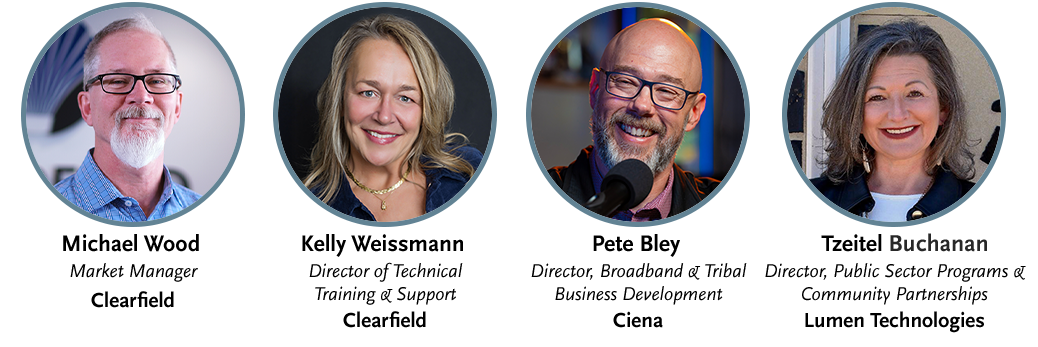
As BEAD funding approaches, the race is on to build the skilled fiber workforce needed to close the digital divide. This webinar brings together industry experts from Clearfield, Lumen, and Ciena to discuss how technician training fuels economic growth, empowers individuals and their communities, and ensures broadband projects succeed. We’ll explore challenges in recruiting, preparing, and retaining talent—especially in rural and hard-to-reach areas. Clearfield will also provide background to a new training initiative designed specifically for Native American communities, creating pathways for local residents to gain certification, opening up living-wage jobs opportunities, and with the ultimate goal of tribal lands connected with high-speed fiber broadband.

Presented by:

Additional Resources:

FFB Week 39: Aging in Place: Powered by Fiber

Aging in Place: Powered by Fiber

This week’s Fiber for Breakfast podcast, Thomas Kamber, founder and executive director of Older Adults Technology Services (OATS) from AARP, shared how broadband—and fiber in particular—is reshaping the experience of aging in place. From his early work in post-9/11 New York to leading OATS’ nationwide growth, Kamber has seen first-hand how the importance of fiber connectivity can empower older adults with independence, health, and community.

Kamber founded OATS in 2004 after meeting a 77-year-old woman who wanted to participate in community rebuilding but didn’t know how to use the internet. “I started giving her volunteer lessons, thinking I was going to help her learn technology—which I did—but she helped me understand how older people were navigating a whole new era of aging,” he recalled. At that time, only 22% of Americans over 65 had ever been online. Today, OATS and its award-winning Senior Planet program reach more than 700,000 people annually through classes, flagship centers, and partnerships at over 600 sites nationwide.

Central to this work is reliable broadband. “The fact that you’re measuring and fighting for access and connection—fiber that’s strong, reliable, and expandable—is absolutely vital,” Kamber stressed. “Older adults don’t have another 50 years to wait. We need to get them connected now.”

From Bingo Halls to Broadband Communities

For decades, senior services revolved around in-person activities with limited reach. Fiber connectivity has transformed that model. OATS now supports hybrid learning where participants in Nashville can join peers in Denver or even Australia for a cybersecurity or financial planning class. “Technology has transformed how organizations work together and how people participate,” Kamber said.

Connectivity also fuels skills development and workforce opportunities. Many older adults are using broadband to reskill online, participate in the economy, or pursue lifelong passions. “The enrichment of people’s skills is profound—especially for older adults who have more time in retirement to do more,” Kamber noted.

Telehealth and Well-Being

The pandemic highlighted another critical role for broadband: healthcare. When reimbursement rules expanded, telehealth adoption surged. Kamber cited a woman in Wyoming who had driven seven hours round-trip each month for a specialist visit. “She learned how to use telehealth through one of our partner sites, and suddenly that trip was no longer a necessity. That’s life-changing.”

Still, fewer than a quarter of older adults regularly use telehealth. Reliable broadband is the prerequisite. As Kamber emphasized: “If you’ve ever seen an older adult with limited mobility spend all day for a 15-minute appointment, you know why fiber is so essential to healthcare access.”

Tackling Isolation and Fraud

Social connection remains one of the biggest challenges for older Americans, with one in five facing severe isolation. Broadband can help bridge that gap. OATS research with Cornell found that distributing tablets—and providing training—significantly expanded older adults’ social networks. “Everybody made more friends,” Kamber said. “Those who took online training doubled the effect.”

But with opportunity comes risk. Older adults are disproportionately targeted by fraud and scams. OATS is incorporating AI literacy and digital security into its curriculum. “When you turn 60, you get a target on your back,” Kamber warned. “We have to empower people to use AI and technology intentionally, not just to participate, but to protect themselves.”

What ISPs Can Do

For ISPs and network builders, Kamber sees enormous partnership potential. Through Senior Planet, providers can connect customers to free digital literacy classes offered in English, Spanish, and Chinese. Local libraries and senior centers can license OATS’ curriculum at no cost. Customized partnerships are also possible.

“Think about the way fiber broadband has opened possibilities for what my organization can do, for what AARP can do, and for what older adults are doing,” Kamber concluded. “We are activating really powerful change in our communities.”

Click here to listen to the full episode or find previous episodes of Fiber for Breakfast.

Click here to view the slides used in this episode.

Fiber Broadband Association Advises Outdated Permitting Policies are Slowing Broadband Deployments

Fiber Broadband Association Advises Outdated Permitting Policies are Slowing Broadband Deployments 
Research highlights permitting benefits, challenges, and roadmap to faster, more equitable internet access 

Washington, D.C.— (September 24, 2025)—Today the Fiber Broadband Association (FBA) announced a paper created by its Deployment Specialists Committee, titled, “Permitting for Fiber Network Projects: The Good, the Bad, and the Ugly”.  The paper explores the broadband permitting landscape, categorizing its benefits, challenges, and opportunities for optimization. It finds that overly complex and inconsistent permitting processes across states are slowing down broadband infrastructure deployment and jeopardizing billions in federal investment and hindering efforts to close the digital divide. 

Permitting is a necessary governmental process that serves to protect public safety, prevent damage to infrastructure, ensure fair use of right-of-way access, and preserve the environment and cultural heritage areas. However, FBA’s latest research paper points out that permitting is often cumbersome, with conflicts between stakeholders and incumbent interests, poor communications between permit seekers and government agencies, lack of financial resources, diversified regulations, and outdated paper-based processes all contributing to delays that increase project costs and postpone or stop efficient and rapid construction.  

“We’re at a historic moment for broadband expansion,” said Brendan O’Boyle, Deployment Specialists Committee Chair.  “But if states don’t modernize their permitting processes, they risk wasting time and taxpayer dollars. Our research shows what’s working and what’s holding us back, and it’s clear that better permitting policy is key to faster, more affordable connectivity.” 

“We’re at a historic moment for broadband expansion,” said Brendan O’Boyle, Deployment Specialists Committee Chair.  “But if states don’t modernize their permitting processes, they risk slowing deployment and unnecessarily increasing costs, which will limit the benefit of precious taxpayer dollars. Our research shows what’s working and what’s holding us back, and it’s clear that better permitting policy is key to faster, more affordable connectivity.”  

To address these challenges, the FBA paper outlines five concrete strategies states can adopt to modernize permitting:  

  • Adopting statewide model ordinances 
  • Implementing digital permit tracking platforms 
  • Establishing Dig Once policies 
  • Standardizing pole attachment protocols 
  • Incorporating escrow and mediation into dispute resolution  

This best practice whitepaper also advises on ensuring agency personnel are well-trained and knowledgeable about broadband technologies. Broadband permitting can be streamlined without overburdening federal and state budgets, ensuring long-term feasibility and effectiveness for a utility that desperately needs structure to ensure all citizens have proper access. 

The full paper can be downloaded here. To learn more about FBA research and other initiatives, subscribe to FBA’s Fiber Forward Weekly newsletter here to stay updated. 

FFB Week 38: Building Broadband Ecosystems for Growth

FFB Week 38: Building Broadband Ecosystems for Growth

This week’s Fiber for Breakfast featured Greg Wilson, CEO of Ripple Fiber, who shared how his company is building an ecosystem designed to fuel long-term growth and market resilience. Ripple Fiber may be just four years old, but the company is already carving out a strong position in the competitive broadband landscape. Founded in 2021 and headquartered in Charlotte, North Carolina, Ripple has grown quickly by pairing entrepreneurial grit with a strategic focus on mergers, acquisitions, and partnerships. 

Wilson’s path to Charlotte began in South Africa, where he built businesses in data centers, middle-mile network, and cloud services long before “cloud” became a mainstream term. His early ventures in fiber to the home emerged almost by accident initially to support neighborhood security cameras but quickly revealed the potential for residential broadband. As demand surged, Wilson and his partners created platforms and processes to scale from dozens of installs to tens of thousands each month Their experience in open access markets, where dozens of providers shared infrastructure, required a high degree of automation and efficiency. Those lessons became core to Ripple’s playbook. 

Wison’s arrival in the U.S. market came with immediate challenges. Within weeks of turning up Ripple’s first network south of Charlotte competitors Google Fiber and Windstream overbuilt the same area. Rather than retreat, Wilson doubled down, convinced that fiber’s performance advantages over cable would win customers. “Fiber is a far better technology,” Wilson said. “Any person that applies common logic has to get to the decision that fiber is going to outperform cable – it’s just a matter of time.” Ripple’s model aims for breakeven at around 20-25% penetration, with strong profitability above 40%. While competition is fierce and established providers are aggressive with discounts and promotions, Wilson emphasized that fiber’s reliability, speed, and latency are advantages that hold steady over time

Ripple’s ecosystem approach extends beyond infrastructure. The company has built proprietary tools to identify and evaluate expansion markets, layering industry datasets with its own analytics. Sophisticated algorithms allow Ripple to model densities, costs, and take-rate assumptions in real-time, helping the team pivot as quickly as competitive conditions change. Wilson noted that while the original plan was to expand concentrically from Charlotte, the data pointed to opportunities in multiple states, and Ripple has since established a presence in eight markets.  

Operating in the U.S. presents different challenges than in South Africa but Wilson said the key to success in both regions is empowering local teams to solve problems on the ground. Leveraging offshore engineering and service desk support has helped Ripple scale efficiently, while lessons learned and smaller, harder to reach communities abroad have given the company a head start and managing niche rollouts in the US.  

Ripples portfolio today offers 500 Mbps, 1 Gbps, and 2 Gbps service tiers, with most customers opting for the higher speeds. Wilson said uptake has exceeded expectations, reflecting growing household demand for bandwidth-hungry applications. “we’ve been really surprised in terms of people’s appetite for speed – the majority of our uptake is on the gig and higher packages.” Looking ahead, Ripple plans to roll out new packages aligned with emerging Wi-Fi standards, ensuring customers get the full benefit of their fiber connections.  

For Wilson, building Ripple is not just about networks, but about community and collaboration. His company’s annual Myriad Mountain Masters cycling event in South Africa brings together clients, financiers, and suppliers for a multi-day mountain biking adventure embodying the spirit of partnership that underpins their strategy. As Wilson put it, the company’s success depends on creating an ecosystem where infrastructure, software, talent, and capital all move together towards the same goal: delivering fast, reliable fiber broadband to millions of homes.  

Click here to listen to the full episode or find previous episodes of Fiber for Breakfast. 

EPB QuantumSM adds hybrid computing to comprehensive quantum development platform

EPB QuantumSM adds hybrid computing to comprehensive quantum development platform
Project to include IonQ, Oak Ridge National Laboratory and NVIDIA

WASHINGTON, D.C. (Sept. 17, 2025) — Today at Quantum World Congress, EPB QuantumSM announced that it is enhancing its quantum computing resources by adding hybrid computing capabilities. Through an agreement with the Department of Energy’s Oak Ridge National Laboratory (ORNL), an NVIDIA DGX system has been installed at the EPB Quantum CenterSM in Chattanooga, Tennessee, which is already home to America’s first commercially available quantum network and IonQ’s Forte Enterprise Quantum Computer scheduled for commissioning in early 2026. Watch video here. 

The combination of classical supercomputing along with cutting-edge, commercially available quantum technology platforms within the same facility further solidifies EPB Quantum as a comprehensive national resource for developing and commercializing real-world applications for quantum technologies.

In EPB Quantum’s first use of the new hybrid computing resources, EPB and ORNL will work with NVIDIA and IonQ to explore solutions for optimizing power grids. By pushing the frontier on maximizing efficiency in local electric system operations, the project aims to identify algorithms, methodologies and best practices for enhancing power distribution across the U.S.

“This grid optimization project with ORNL, IonQ and NVIDIA shows how EPB Quantum is bridging a critical gap,” said David Wade, CEO of EPB. “By making a comprehensive suite of quantum development resources accessible as a real-world platform for innovation, we’re making it possible for entrepreneurs, industry leaders, national labs and universities to work side by side toward breakthroughs that can really make a difference for people and communities in the years ahead.”

Since launching the country’s most advanced automated energy grid in 2009, EPB’s electric system has generated trillions of operational data points through thousands of automated sensors operating across 15,000 miles of fiber optic cable. The new project will focus on minimizing electrical losses and voltage drops while better balancing load to improve capacity and enhance reliability.

“EPB and ORNL have consistently demonstrated how combining world-class research capabilities with real-world energy infrastructure can accelerate innovation,” said ORNL Director Stephen Streiffer. “From advancing grid automation to pioneering quantum-secure communication, our joint efforts have repeatedly moved technologies from concept to practical application. This next phase builds on that record of success to push the boundaries of what’s possible for the nation’s energy future.”

Beginning in 2016, EPB, with ORNL, Los Alamos National Laboratory and Qubitekk began working together on “QED: Quantum Ensured Defense of the Smart Electric Grid,” to apply quantum networking to protect power grid signals against third-party infiltration. That experience won a 2021 R&D 100 Award and led to the launch of EPB Quantum Network®, the nation’s first commercially available quantum network and the eventual acquisition of Qubitekk by IonQ.

“IonQ’s quantum hardware is advancing at a tremendous pace, which has allowed us to unlock early quantum advantage by partnering and building powerful algorithms,” said Niccolo de Masi, Chairman and CEO of IonQ. “By combining EPB’s real-world infrastructure with the expertise in national labs, industry leaders and innovators, IonQ is developing practical applications with real commercial advantage.”

The combination of quantum and classical resources will allow ORNL’s researchers to analyze a volume of EPB’s grid data in ways not previously accomplished.

“The future of scientific computing will see businesses and researchers draw on both quantum and classical hardware within hybrid supercomputing systems”, said Sam Stanwyck, Group Product Manager for quantum computing at NVIDIA. “NVIDIA’s work with EPB, ORNL and IonQ on this project is not only allowing us to glimpse this future but is also helping to build it”.

The outcomes of the project are designed to be replicable so other energy systems can apply them to their own. EPB operates a 600-square-mile energy distribution system in southeast Tennessee.

About IonQ
IonQ, Inc. [NYSE: IONQ] is the leading commercial quantum computing and networking company, delivering high-performance systems aimed at solving the world’s most complex problems. IonQ’s current generation quantum computers, IonQ Forte and IonQ Forte Enterprise, are the latest in a line of cutting-edge systems that have been helping customers and partners such as Amazon Web ServicesAstraZeneca and NVIDIA achieve 20x performance results.

The company is accelerating its technology roadmap and intends to deliver the world’s most powerful quantum computers with 2 million qubits by 2030 to accelerate innovation in drug discovery, materials science, financial modeling, logistics, cybersecurity and defense. IonQ’s advancements in quantum networking also positions the company as a leader in building the quantum internet.

The company’s innovative technology and rapid growth were recognized in Newsweek’s 2025 Excellence Index 1000, Forbes’ 2025 Most Successful Mid-Cap Companies list, and Built In’s 2025 100 Best Midsize Places to Work in Washington DC and Seattle, respectively. Available through all major cloud providers, IonQ is making quantum computing more accessible and impactful than ever before. Learn more at IonQ.com.

About ORNL

Oak Ridge National Laboratory is managed by UT-Battelle for the Department of Energy’s Office of Science. The laboratory’s diverse expertise enables translation of scientific discoveries into new technologies that address national priorities. The Office of Science, the single largest supporter of basic research in the physical sciences in the U.S., is working to address some of the most pressing challenges of our time. For more information, please visit https://www.ornl.gov/ and https://energy.gov/science.

About EPB 

Located in Chattanooga, Tennessee, EPB is a nationally recognized energy and communications provider with a mission to enhance quality of life for the people it serves across its 600-square-mile service area. Starting in 2010, EPB gained notice as a national model for building and utilizing its 100% fiber-to-the-home network to deliver cutting-edge services such as the world’s fastest community-wide internet, now with service up to 25 Gig, and the nation’s most advanced automated electric grid.

As a pioneer in fiber optic innovation, EPB also launched EPB Quantum℠ to provide access to cutting-edge quantum technology platforms and help innovators bring paradigm-shifting solutions into the real world. With the launch of EPB Quantum Network in 2023 and EPB Quantum Computing℠ (coming in early 2026), EPB Quantum offers the most comprehensive, commercially available quantum technology platform in the U.S.  Learn more at EPB.com and EPBQuantum.com.

Fiber Broadband Association Announces 2026 Regional Workshops to Seven New Cities Across North America

Fiber Broadband Association Announces 2026 Regional Workshops to Seven New Cities Across North America
Regional Fiber Connect Workshops highlight unique issue, opportunities and challenges with connecting communities across the U.S.

WASHINGTON–(September 16, 2025)–The Fiber Broadband Association (FBA) today announced the seven cities and themes for its 2026 Regional Fiber Connect Workshops. Building on the success of prior years, the 2026 series will bring fiber broadband leaders, innovators, and community stakeholders together to share strategies that advance deployment, spark innovation, and strengthen local impact. Each regional showcases best practices and real-world operational tips with insights from local and regional network operators, officials, and community anchors.

The 2026 workshops will travel to new markets across the United States and Canada, including Oklahoma, Montana, Nebraska, Massachusetts, Georgia, and British Columbia. Each stop will spotlight a distinct theme, from community and cultural connections to cutting-edge applications, that reflects the unique opportunities and challenges in fiber broadband today.

“The Regional Fiber Connect Workshops are more than events-they’re opportunities for communities to learn, connect, and prepare for the future,” said Evann Freeman, EPB Vice President of Government & Community Relations and FBA Conference Chair. “In 2026, we’re tackling issues that matter locally while exploring national and global trends that shape how fiber networks will support economies, innovation, and quality of life for decades to come.”

2026 Regional Fiber Connect Workshops Schedule & Themes

  • Oklahoma City, Oklahoma | February 5 | Tribal Broadband
  • Indianapolis, Indiana | March 19 | The Need for Speed
  • Bozeman, Montana | July 21 | Community Impacts
  • Omaha, Nebraska | August 25 |Precision Agriculture
  • Boston, Massachusetts | September 24 |Innovation
  • Savannah, Georgia | October 27 | Marketing Fiber
  • Vancouver, Canada | November 19 | AI and Telecom

Each Regional Fiber Connect Workshop will feature expert-led discussions on funding, design, and deployment strategies, paired with real-world lessons from successful fiber network operators. Attendees will gain practical insights into building sustainable, future-ready networks while learning how fiber transforms industries, communities, and daily life.

To learn more about each Regional Fiber Connect Workshop and to register, visit https://fiberbroadband.org/regional-fiber-connect-workshop-series/ To learn more FBA and other their events, subscribe to FBA’s Fiber Forward Weekly newsletter.

FBA will also host Fiber Connect 2026, the world’s largest fiber broadband event, from May 17-20, 2026, at the Gaylord Palms Resort and Convention Center in Orlando, Florida. For more information on sponsorship and exhibitor opportunities at the 2026 Regional Fiber Connect Workshops or the annual Fiber Connect event, please contact Lucy Green at lgreen@fiberbroadband.org. Those interested in joining the Fiber Broadband Association can email membership@fiberbroadband.org for further details.

Fiber Broadband Association Opens Call for Speakers for Fiber Connect 2026

Fiber Broadband Association Opens Call for Speakers for Fiber Connect 2026
World’s largest fiber broadband event to deliver content that’s ‘Light Years Ahead’

WASHINGTON–(September 15,2025) –The Fiber Broadband Association (FBA) today announced the Fiber Connect 2026 Call for Speakers is now open. Fiber Connect, the largest fiber broadband event in the world, will be held May 17-20, at the Gaylord Palms Resort and Conference Center in Orlando, Florida.

The Fiber Connect 2026 program will articulate how fiber broadband positions communities “Light Years Ahead” in terms of access to beneficial digital applications and services. Sessions will showcase the future fiber enables, underscoring the long-term impact of fiber broadband for people, families, businesses, industries, communities, and the country, while also sharing best practices for building and expanding fiber infrastructure.

FBA expects attendance at Fiber Connect 2026 to surpass last year’s record of more than 5,000 attendees. Professionals from across the fiber broadband ecosystem attend the event each year, including network operators, service providers, state broadband offices, policy makers, technology innovators, and more.

“The strength of our industry comes from the people and communities driving it forward,” said Evann Freeman, FBA Conference Committee Chair, FBA Board Member, and EPB Vice President of Government & Community Relations. “Fiber Connect is the place to showcase those voices, and we encourage speakers to apply who can share their FTTH experiences, along with stories about how fiber is delivering real benefits today while opening the door to a future that keeps us light years ahead.”

FBA is seeking industry experts to share insights, experience, and best practices at Fiber Connect 2026. Speaker submissions are open for breakout sessions as well as the four thematic programs- Artificial Intelligence, Precision Agriculture, Streaming, and the Marketing and Customer Experience Pre-Conference Workshop. These sessions will be panel-based and focused on key issues driving the fiber broadband industry forward. Submissions should be non-commercial in nature and focus on what the individual speaker can share with the audience. The Call for Speakers is not soliciting topic abstracts or panel proposals.

Individuals interested in participating should submit their qualifications via the Speaker Submission Portal by 8:00 p.m. EDT on Friday, October 31, 2025. More information on the speaker submission process can be found on the FBA website here. The topics for submission include:

Pre-Conference Workshop (Sunday, May 17)

  • Marketing and Customer Experience: focused on marketing metrics, branding, growth strategies, and customer loyalty.

Breakout Sessions (Monday, May 18 – Tuesday, May 19)

  • Deployment Best Practices: Tackle issues, opportunities, and challenges associated with the deployment of fiber broadband; how operators will take fiber further to unserved markets; best practices and/or lessons learned.
  • Outside Plant Considerations: Discuss the realities of deploying fiber broadband to places it has not been deployed before and examine the technologies and systems available.
  • Service Provider Ecosystem: Building Teams That Move Business Forward: Focus on improving the service providers’ experience and reduce silos and challenges.
  • Data Center: Dive into fiber broadband’s role as more than just an enabler of AI, but the infrastructure that will determine AI’s success.
  • Open Access: Explore the Open Access landscape and its evolution: what an open access network is, what it means to ISPs, what models are available, what current and future markets looks like, and what is required to move the market forward.
  • Fiber Economics: Examine the financial considerations and opportunities operators need to consider when deploying fiber broadband services in either greenfield or existing network environments in both rural and urban environments.
  • Local Considerations: Share best practices for working with local agencies on the permitting, ROW, and locates process.
  • Tribal Broadband: Discuss sustainable paths forward to connect tribal communities with fiber broadband in accordance with individual nations’ laws and customs.
  • Network Expansion: Address the operational issues, opportunities, and challenges of managing growing networks and services.
  • Marketing: Innovative approaches to captivate your audience, build trust, and drive sustainable growth, as well as practical insights, trends for the year ahead, and tools needed to thrive in a competitive landscape.
  • MDU: Provide a detailed roadmap for evaluating existing infrastructure, designing an optimal fiber network, selecting the right technology and equipment, and ensuring compliance with local regulations.
  • Middle Mile: Discuss the deployment of middle mile networks to support network operator fiber broadband expansion to serve rural communities.

All Fiber Connect 2026 speaking submissions will be reviewed by the FBA Conference Committee with the following considerations: expertise on subject matter, involvement with FBA, and relevant speaker experience. Submissions promoting or focused on specific company products or solutions will not be considered. For questions about submissions, contact Program Director Richard Williams at rwilliams@fiberbroadband.org.

To learn more about Fiber Connect 2026, visit fiberbroadband.org/event/fiber-connect-2026 or subscribe to FBA’s Fiber Forward Weekly newsletter here to stay updated. To learn more about sponsorship opportunities, contact Lucy Green at lgreen@fiberbroadband.org.